Active Vibration Control Technology: A Precision Game of Dynamic Sensing and Counter-Compensation
Active vibration control technology employs sensors to capture real-time vibration signals. After algorithmic analysis, it drives actuators (such as electromagnetic actuators or piezoelectric ceramics) to generate counter-vibrations, forming a closed-loop system of “sensing-computing-compensation.”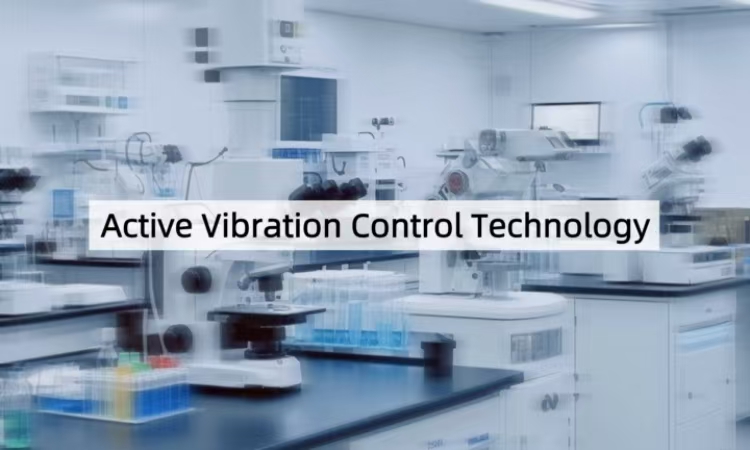
For instance, LeadTop's LVH-T15 active vibration isolation platform employs a hybrid technology combining electromagnetic actuators and air springs to achieve six-degree-of-freedom vibration suppression. It delivers low-frequency attenuation exceeding 35dB@5Hz, significantly enhancing electron microscope imaging stability.
Core of Active Vibration Control Technology: Synergistic Evolution of Sensors, Algorithms, and Actuators
Technological breakthroughs depend on the synergy of three key modules: high-precision sensors (e.g., accelerometers) must extract effective signals from micrometer-level vibrations; adaptive algorithms (e.g., LMS, neural networks) must complete waveform calculations within milliseconds; and high-response actuators must precisely output compensatory forces.
Take LeadTop's LVH-T15 active vibration isolation platform as an example: its electromagnetic actuators achieve response times <30ms to rapidly suppress step disturbances while supporting online modal analysis. This enables dynamic optimization of control parameters, ensuring stability for heavy-load (500kg) equipment in complex environments.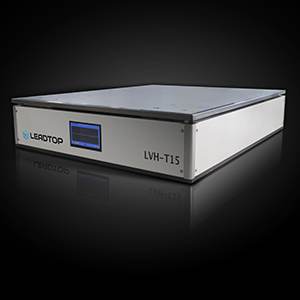
Applications of Active Vibration Control Technology: Bridging Laboratories to Industrial Sites
This technology is now widely deployed across electron microscopy imaging, semiconductor inspection, life sciences, and other fields.
For instance, cryo-electron microscopes require operation at 0.1nm resolution. Traditional isolation struggles to eliminate low-frequency interference, whereas LeadTop's LVH-T15 actively reduces vibration disturbances by 90% through active control technology, significantly enhancing image clarity.
In semiconductor lithography, this technology stabilizes FIB beam flow and minimizes processing errors. Its “full-frequency + high-load” characteristics make it an ideal vibration isolation solution for heavy-duty precision instruments, propelling high-precision manufacturing toward extreme accuracy.


