Vibration control is a core requirement for the stable operation of precision equipment, and the selection of isolators directly affects equipment performance. This article focuses on three mainstream types of isolators, analyzing their technical characteristics and typical application scenarios to help users accurately match their needs.
Solid state rubber isolator: an economical solution for mid to high frequency vibration
Taking LeadTop's solid rubber isolator POT-P series as an example, it adopts a composite rubber structure and effectively absorbs mid to high frequency vibrations through the elastic deformation of multiple layers of rubber, especially good at horizontal vibration isolation. Compact structure, easy installation, equipped with a lifting and adjusting seat that can achieve millimeter level leveling, suitable for scenarios with low sensitivity to vibration such as microscopes and medical equipment.
In terms of performance parameters, the vertical natural frequency is 6.5-12Hz, the horizontal frequency is 3-8Hz, the load coverage is 180-800kg/piece, and the recovery time is less than 5s, balancing cost and efficiency. LeadTop's POT-P series, with its modular design, supports rapid deployment and maintenance, making it a cost-effective choice for industrial testing and biological laboratories.

Hollow cone rubber isolator: a balanced choice for high-frequency and large loads
Hollow cone rubber isolators achieve efficient isolation of mid to high frequency vibrations through a special conical structure combined with high damping rubber, while also having a high load-bearing capacity (50-700kg). Its built-in precision adjustment system can fine tune the height, and with optional casters for easy device movement, it is suitable for scenarios such as optical manufacturing and semiconductor testing that require both vibration and stability.
LeadTop's hollow cone rubber isolator POT-G series has a natural frequency as low as 4-8 and a significantly better damping ratio than traditional rubber isolators, reducing resonance risk by 70% and meeting the stringent requirements of precision machining equipment.
Pendulum Air Float Isolator: The Ultimate Solution for Sub Hertz Vibration Isolation
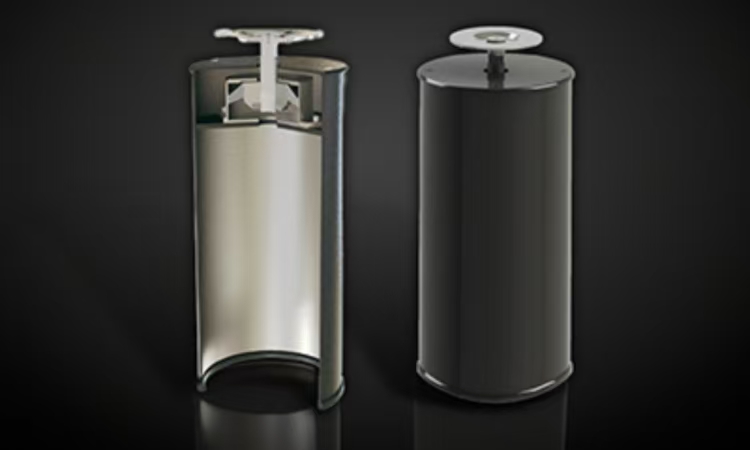
The ZDT-B series swing rod air floating vibration isolator adopts the single pendulum principle and composite airbag technology to compress the horizontal natural frequency to 1.0-1.5Hz and the vertical frequency to 1.0-2.0Hz, achieving a support effect close to "zero vibration".
Its 5Hz isolation efficiency exceeds 90%, and it has automatic horizontal compensation and silent operation characteristics, making it a standard configuration for ultra precision equipment such as laser interferometers and quantum computing.
LeadTop optimizes airbag materials and damping control to achieve outstanding performance in 0.1 μ m vibration control for the ZDT-B series, becoming a core support for research institutions and high-end manufacturing.
Summary: Scene driven, technology empowered
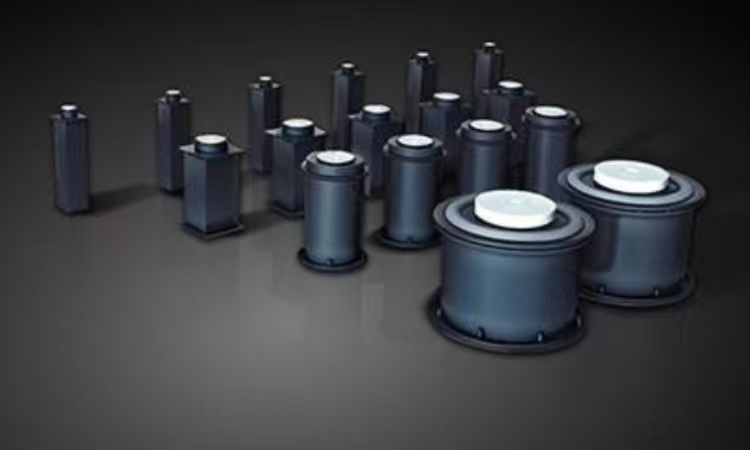
Rubber isolators are economically adaptable to mid to low frequency scenarios, while air flotation isolators meet cutting-edge requirements with ultra-low frequency performance. LeadTop, as a professional provider of vibration isolation solutions, relies on the POT-P, POT-G, and ZDT-B series of isolators to cover all scenarios from industrial testing to scientific research experiments, helping equipment break through physical vibration limits and achieve stable operation.


