In scenarios such as precision manufacturing, aerospace, and earthquake resistance in buildings, vibration is like an invisible "disruptor", which can interfere with equipment accuracy or cause structural failure. Damping materials, with their core characteristic of converting mechanical vibration energy into thermal energy, have become a key support for vibration isolation technology.
This article will analyze how damping materials can create a "zero vibration" environment from material types, technological breakthroughs to application practices, and focus on exploring LeadTop's innovative solutions in the field of vibration isolation.
Classification and core technology of damping materials
Damping materials can be divided into three categories based on their composition, each with its own unique isolation mechanism:
For example, LeadTop's POT-X series anti creep solid rubber vibration isolation pad achieves a 10-year extrapolation deformation rate of only 35.6% by adding polyester fiber and graphite reinforcement material rigidity, balancing tensile strength and creep rate, with a service life of over 12 years. It can eliminate 0.5-5Hz building sway interference in semiconductor equipment and ensure nanoscale processing accuracy.
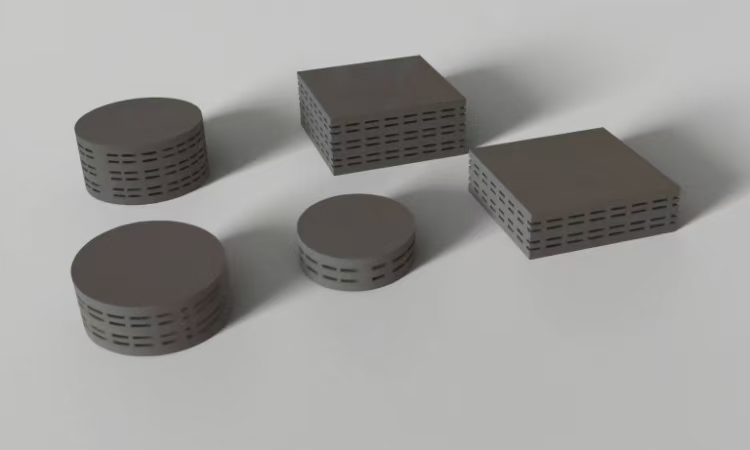
LeadTop's LVH-T15 heavy-duty active vibration isolation platform adopts a composite structure of "electromagnetic actuator+four stage air spring", achieving six degrees of freedom vibration isolation in the 1-200Hz frequency band, and a vibration isolation efficiency of over 90% in the 5Hz frequency band under 500kg load. It is designed specifically for transmission electron microscopy (TEM) and scanning electron microscopy (SEM) to eliminate building sway interference while improving imaging resolution.

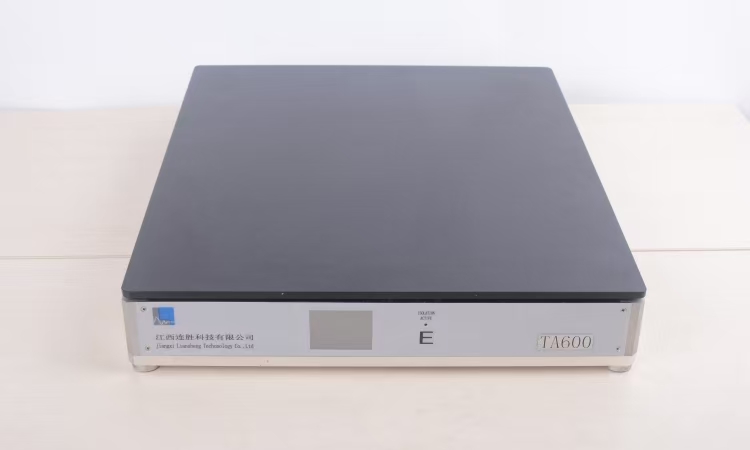
LeadTop's TA800 desktop active isolation table is equipped with an active damping matrix and a passive isolation layer, achieving 95% @ 10Hz isolation efficiency in the 1-200Hz wide frequency band. It supports fully automatic height adjustment and 30 second dynamic leveling, and is suitable for ultra precision scenarios such as wafer inspection and femtosecond laser systems.

Technological breakthrough of damping materials: a revolution from passive to active vibration isolation
Traditional damping materials rely on the energy dissipation characteristics of the material itself, while active vibration isolation technology achieves "dynamic capture" and "real-time neutralization" of vibration through the linkage of sensors and actuators. LeadTop has achieved multiple breakthroughs in this field:
The porous array design achieves linear superposition of damping forces, and with the intelligent switching of series and parallel modes by the dual chamber structure, it can suppress ground vibration and filter the reaction force generated by the equipment's own motion in laser interferometry measurement.

Application Practice of Damping Materials: From Laboratory to Production Line
LeadTop's damping materials and isolation platforms have been widely used in semiconductor manufacturing, medical imaging, building seismic resistance and other fields, verifying its technical strength and scene adaptability:
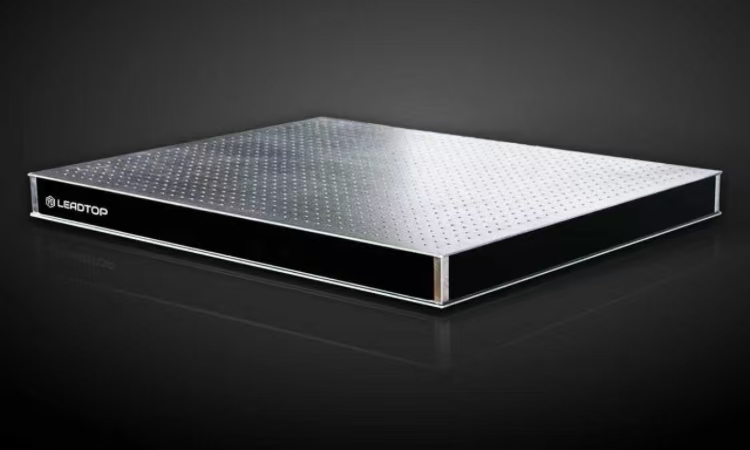
The development of damping materials is essentially a deep integration of materials science and vibration control technology. From the popularization of rubber vibration isolation pads to breakthroughs in intelligent composite materials, and then to the system integration of active vibration isolation platforms, LeadTop continues to promote the evolution of vibration isolation technology towards higher precision, wider frequency bands, and more intelligence through innovative damping materials, modular design, and full scenario verification.
In the future, with the penetration of nanomaterials and artificial intelligence technology, damping materials will safeguard the stable operation of the precision world in a wider range of scenarios.


