Vibration control is the core link to ensure the stable operation of precision equipment. As the two mainstream vibration reduction components, isolators and isolation pads are often confused due to their similar names, but in fact, there are significant differences in technical paths, performance boundaries, and industry adaptability. This article compares technical parameters, industry adaptation, and maintenance costs to help you make scientific decisions.
1、 Technical parameters of isolators and isolation pads: game between natural frequency and damping ratio
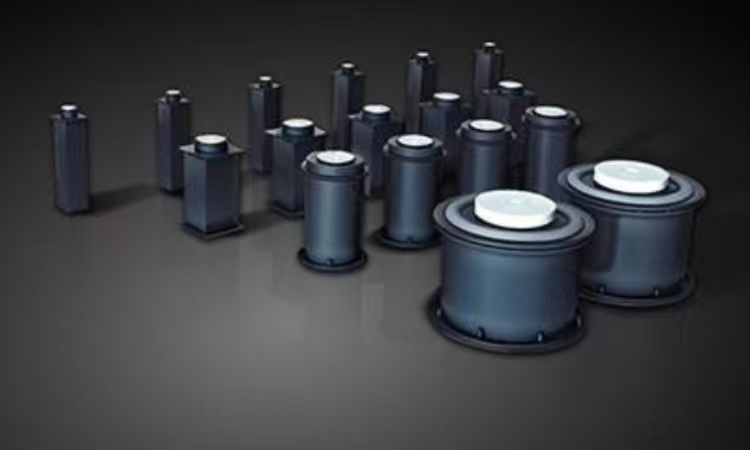
The isolator (such as LeadTop ZDT-B series) reduces its natural frequency through mechanical structure optimization. Its single pendulum principle reduces the horizontal natural frequency to 1.0-1.5Hz and the vertical natural frequency to 1.0-2.0Hz. Coupled with an external damper, it can effectively suppress resonance and is suitable for low-frequency vibration scenarios.
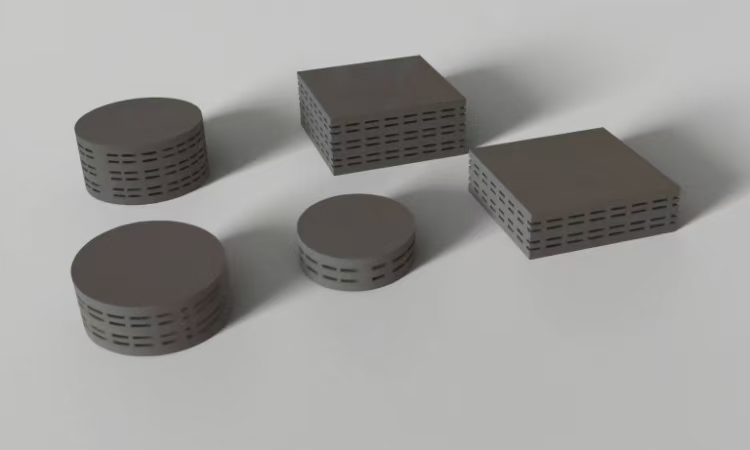
The isolation pad (such as LeadTop POT-X series) is controlled by material formula and structural design parameters. After adding polyester fibers to the composite rubber, the vertical natural frequency is 6.5-16Hz, the horizontal frequency is 2-8Hz, and the damping ratio is 0.05-0.2, making it more effective in attenuating mid to high frequency vibrations.
2、 Industry adaptation of isolators and isolation pads: precision manufacturing vs industrial infrastructure
In high-precision industries such as semiconductors and optical instruments, equipment is highly sensitive to vibration and requires the selection of isolators. For example, the ZDT-B series air flotation isolators can meet the control requirements of laser interferometers for sub micron level vibrations, and the automatic leveling function simplifies the installation process.
In the field of industrial infrastructure, such as the foundation isolation of large compressors and stamping equipment, seismic isolation pads have more cost advantages. The POT-X series rubber pads can be combined in multiple layers to reduce natural frequency while improving load-bearing capacity, and have a 12 year long lifespan with reduced replacement frequency.
3、 Maintenance cost of isolators and isolation pads: long-term stability vs. ease of replacement
Due to its complex structure, the vibration isolator requires professional maintenance personnel. However, the LeadTop ZDT-B series reduces failure rates through modular design, and the airbags and dampers can be replaced separately, extending the overall lifespan.
The maintenance of the isolation pad is simple, and the POT-X series has excellent creep resistance. The 10-year extrapolated creep is only 35.6%, and regular checks on bolt tightness are only required. It is suitable for scenarios with limited budget or insufficient maintenance resources.
Summary:
The selection of isolators and isolation pads requires a comprehensive consideration of vibration frequency, equipment accuracy, industry standards, and cost budget. LeadTop, with its differentiated product matrix of ZDT-B series air flotation isolators and POT-X rubber isolation pads, provides a one-stop solution of "low-frequency precise control+medium high frequency economic isolation" for different scenarios.


