The Domestic Active Vibration Isolation Platform is applied in the field of industrial manufacturing
In the wafer inspection process, the 0.5-2Hz vibration transmitted by the building is the "invisible killer" that causes beam drift in FIB equipment. The domestically produced LVH-T15 active vibration isolation platform, through electromagnetic inverse compensation technology, reduces vibrations in the 5Hz frequency band to less than 1/30 of the original amplitude, thereby increasing the wafer inspection yield from 89% to 96%.
LeadTop's modular expansion design developed for this platform supports a load upgrade from 500kg to 800kg, meeting the vibration isolation requirements of large-scale lithography machines and becoming the "light of domestic products" in the high-end manufacturing field.

Domestic active vibration isolation platform applied in the field of life sciences
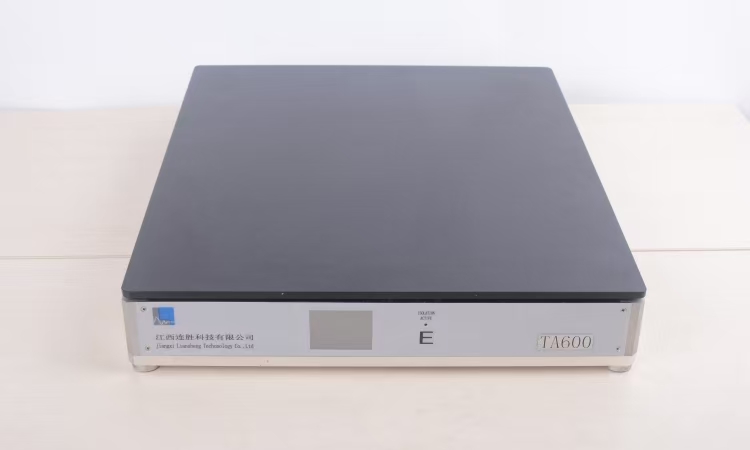
Cryo-electron microscopy technology is sensitive to environmental vibrations at the atomic level, with vibrations of just 0.1μm potentially leading to the failure of protein structure analysis. The domestically produced TA600 table-type active vibration isolation platform employs three-axis active damping control, achieving a vibration isolation efficiency of >95% in the 10Hz frequency band under a 100kg load.
Its 30-second dynamic leveling function automatically corrects any tilt of the experimental platform. The temperature compensation module integrated by LeadTop into this platform enables the device to maintain nanometer-level stability in an environment ranging from -10℃ to 60℃.
The development trend of Domestic Active Vibration Isolation Platform
The domestic active vibration isolation platform is transitioning from "import substitution" to "global competition". By establishing a full-chain system encompassing design, manufacturing, and service, LeadTop has shortened the product delivery cycle to one-third of that of imported brands and offers an extended warranty of 5 years.
Its LVH-T15 and TA600 series have obtained CE certification and have been widely adopted by top institutions. With the surge in demand for precision manufacturing driven by the "new infrastructure", the market share of domestic platforms is expected to exceed 35% within 3 years, becoming a benchmark case for the localization of high-end equipment.


