Passive Isolators: The Cost-Effective Choice with Classic Structures
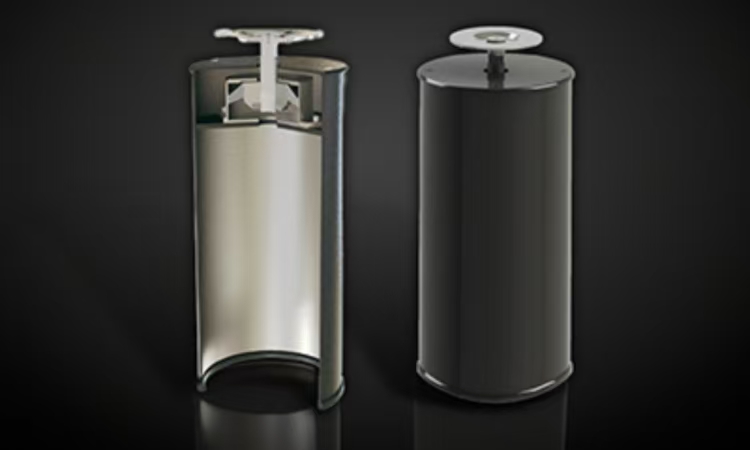
Passive isolators rely on the inherent properties of elastic components like springs and rubber to achieve vibration isolation without requiring external energy input. Among these, steel spring isolators are renowned for their low-frequency isolation performance, making them suitable for heavy equipment such as generators and compressors. Rubber isolators, customized for stiffness through vulcanization, are commonly used for medium-to-small equipment like pipelines and fans.
LeadTop's POT-G Series Hollow Conical Rubber Isolators utilize a specialized rubber compound and conical structure to achieve efficient attenuation of mid-to-high frequency vibrations at natural frequencies between 4-8Hz. Their precision adjustment system meets micron-level stability requirements for applications like microscopes and optical manufacturing.
Active Isolators: Precision Solutions with Intelligent Control
Active isolators continuously monitor vibration signals via sensors, driving electromagnetic actuators or piezoelectric ceramics to generate counteracting forces for dynamic compensation. These isolators are primarily used in fields sensitive to low-frequency vibrations (0.5-20Hz), such as quantum research and medical imaging.
LeadTop's LHV series active vibration isolation modules combine air springs with six-degree-of-freedom active control technology, reducing vibration transmission rates below -30dB. With an 8ms response time capable of withstanding 25g impacts, their intelligent load adaptation (0.5-5 tons) has been deployed in nanoscale equipment across multiple national laboratories.

Hybrid Isolators: Innovative Integration for Application-Specific Adaptation
Hybrid isolators integrate multiple technological advantages. For instance, the pendulum-air-bearing isolator combines pendulum principles with air-bearing technology to optimize horizontal/vertical natural frequencies (1.0-1.5Hz/1.0-2.0Hz), achieving 86-92% vertical and 88-94% horizontal isolation efficiency at 5Hz.
LeadTop's ZDT-B Series pendulum-rod air-bearing isolators utilize ultra-thin composite airbags and external dampers, balancing automatic leveling with silent operation. This makes them ideal for laser interferometers and high-precision microscopes.
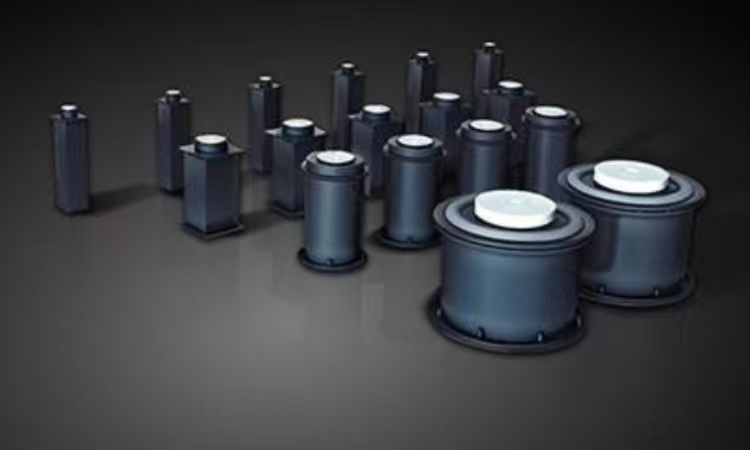
The classification of vibration isolators fundamentally reflects the alignment of technical approaches with application requirements. From cost-effective passive solutions to intelligent active precision systems, and further to integrated hybrid technologies, companies like LeadTop are advancing vibration isolation toward greater efficiency and customization through material innovation and enhanced control algorithms.


