The POT-X series of creep-resistant vibration isolation pads utilizes composite rubber for enhanced durability and stability, offering innovative mesh/solid structures for optimal vibration damping across diverse applications.
In high-precision fields such as precision manufacturing, optical experiments, and semiconductor processing, vibration is a "hidden killer" that affects equipment performance and product quality. As the core component for resisting vibration interference, the selection of vibration isolators directly affects the stability and reliability of the equipment. This article will systematically analyze the strategy of selecting isolators from three dimensions: demand analysis, parameter matching, and brand selection.
1、 Requirement analysis for selecting vibration isolators: clarify the scenario and lock in the core target
The requirements for isolators vary significantly in different scenarios, and precise positioning needs to be determined from three aspects: vibration frequency, equipment characteristics, and installation environment.
- Vibration frequency: If it is necessary to suppress low-frequency vibrations transmitted from the ground (such as 1-10Hz vibrations generated by traffic and equipment operation), a lower natural frequency isolator (such as air flotation type) should be selected; If it is necessary to isolate the mid to high frequency vibrations generated by the equipment itself (such as 10-1000Hz vibrations generated by motors and pumps), rubber isolators or spring isolators are more suitable.
- Equipment characteristics: Precision optical equipment (such as microscopes and laser interferometers) are highly sensitive to vibration and require solutions with ultra-low frequency and high isolation efficiency; Heavy machinery such as punching machines and die-casting machines require high load, impact resistant isolators.
- Installation environment:Compact design is required for space limited scenarios; Devices that require frequent movement, such as portable testing instruments, need to integrate casters or quick disassembly structures.
For example, the laser interferometer in the optical laboratory needs to isolate both low-frequency ground vibrations and mid to high frequency vibrations of the equipment itself. A combination of air floating (low-frequency isolation) and rubber type (mid to high frequency isolation) isolators is required to form a "double-layer protection".
2、 Parameter matching for selecting isolators: key indicators determine the upper limit of performance
The core parameters of the isolator include natural frequency, load range, damping characteristics, and isolation efficiency, which need to be accurately matched with the equipment requirements.
Natural frequency: The threshold value of the isolator should be less than √ 2 times the operating frequency of the equipment. For example, if the operating frequency of the device is 20Hz, the natural frequency of the isolator must be ≤ 14.1Hz, otherwise resonance may occur.
- Load range: It is necessary to cover the total weight of the equipment (including accessories) and reserve a 20% margin. Overload may cause deformation and failure of the isolator, while underload reduces the isolation effect.
- Damping characteristics: The greater the damping, the faster the vibration attenuation, but excessive damping can reduce the isolation efficiency. Precision equipment needs to balance damping and isolation efficiency to avoid prolonged resonance affecting performance.
- Isolation efficiency: It is usually a function of frequency ratio (equipment frequency/natural frequency of the isolator), and the higher the frequency ratio, the stronger the isolation efficiency. For example, a certain air flotation isolator can achieve a vertical isolation efficiency of 90% when the frequency ratio is 5.
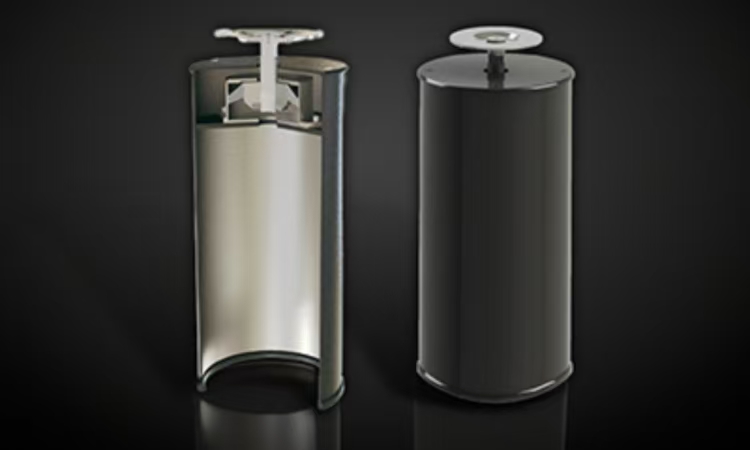
Taking LeadTop's hollow cone rubber isolator POT-G series as an example, its natural frequency is 4-8Hz, the load coverage is 50-700kg, the damping is large and the recovery period is short, which can effectively isolate the mid to high frequency vibration of microscopes and optical manufacturing equipment, and reduce the risk of resonance.
3、 Brand selection of vibration isolators: equal emphasis on technical strength and scene adaptation
The brand's technological accumulation, product matrix, and customization capabilities are key considerations when selecting isolators.
- Technical strength: Priority should be given to brands with independent core technologies, such as LeadTop, as a professional supplier of vibration isolation optical platforms and accessories. Their products achieve performance breakthroughs through material science (such as high-tech rubber formulations), structural optimization (such as hollow cone design), and simulation analysis.
- Product matrix: Brands need to provide a full range of solutions from basic to high-end. For example, LeadTop's POT-G series (rubber isolation) is suitable for mid to high frequency scenarios, while the ZDT-B series (swing rod air floating type) meets high-precision requirements such as laser interference and semiconductor processing with ultra-low frequency (horizontal 1.0-1.5Hz, vertical 1.0-2.0Hz) and high isolation efficiency (vertical/horizontal efficiency of 86-92%/88-94% at 5Hz).
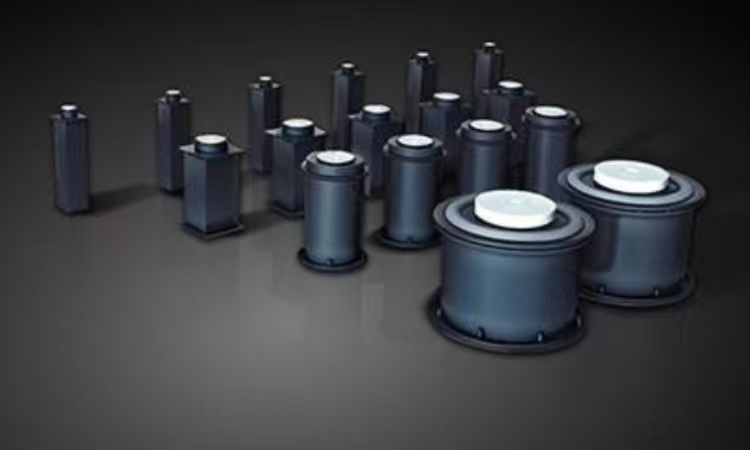
- Customization ability: Special scenarios require customized design. LeadTop can provide vibration isolators for non-standard loads, special sizes, or integrated adjustment systems, supporting rapid prototyping and small batch production.
The selection of isolators is a three-dimensional decision-making process of "demand parameter brand". By accurately analyzing scene requirements, matching core parameters, and selecting brands with mature technology and complete product matrices (such as LeadTop), a complete vibration isolation protection from principle to application can be built for precision equipment, laying a solid foundation for stable operation.


