Mechanical vibrations pose significant threats to high-precision applications, including semiconductor manufacturing, nanotechnology, and biomedical imaging. Even sub-micron vibrations can disrupt processes like atomic force microscopy (AFM) or confocal imaging, leading to blurry images, measurement errors, and equipment fatigue. Traditional passive isolation methods, such as rubber mounts or air springs, are limited by their inability to handle low-frequency vibrations (<5 Hz) and dynamic load changes, making them ineffective for modern ultra-precision demands.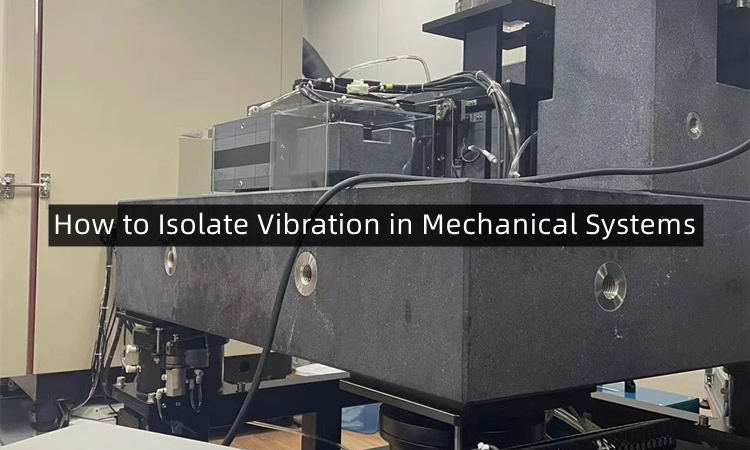
Active vibration isolation systems dynamically counteract vibrations using sensors, actuators, and real-time control algorithms. Unlike passive systems, they excel in low-frequency environments by generating inverse vibrations to cancel disturbances. Key advancements include multi-degree-of-freedom (6-DoF) control, which isolates all translational (X, Y, Z) and rotational (pitch, roll, yaw) motions, and adaptive load compensation, which maintains stability under fluctuating payloads. These systems are critical for applications requiring nanoscale precision, such as quantum computing and lithography.
While active isolation is transformative, LeadTop’s VCM-D600 pushes boundaries further. Its multi-DoF active compensation achieves <0.5% cross-axis coupling error, ensuring precise six-axis stabilization. The system breaks the 1 Hz isolation limit, delivering >90% efficiency at 5 Hz and >95% at 10 Hz—ideal for heavy-duty precision tools like CNC machines and confocal microscopes. With 20 ms response time and ±30% dynamic load correction, it adapts instantly to disturbances, while <0.3 μm/√Hz stability at 150 Hz enhances imaging SNR by 40% and reduces tooling errors by 30%.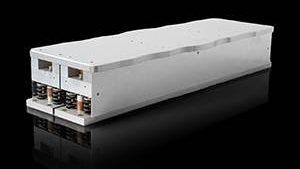
For industries where vibration control directly impacts productivity and quality, active isolation is non-negotiable. LeadTop’s VCM-D600 combines cutting-edge adaptability, ultra-low-frequency performance, and industrial durability, making it a top choice for nanomanufacturing, biophotonics, and advanced metrology. By addressing both technical challenges and real-world application needs, it sets a new standard for precision vibration isolation.


