Introduction
In modern scientific research experiments, vibration interference is one of the main factors affecting measurement accuracy. From nanoscale imaging to quantum mechanics research, from observing biological cells to testing material properties, the application of vibration isolators is ubiquitous. This article will explore the specific applications of isolators in the field of scientific research, as well as how to choose appropriate isolation schemes based on experimental needs.
Isolation requirements in the field of electron microscopy
The impact of vibration on imaging
Electron microscopy (SEM/TEM) is a core equipment for materials science and biology research, with imaging accuracy reaching the nanometer or even sub nanometer level. However, small vibrations can cause electron beam displacement, resulting in blurry images and decreased resolution. Research has shown that vibrations with amplitudes exceeding 10 nanometers significantly affect the quality of electron microscopy imaging.
Solution for vibration isolators
For the vibration isolation requirements of electron microscopes, LeadTop's swing rod air floating vibration isolator ZDT-B series is an ideal choice. Its ultra-low natural frequency of 1.0-2.0Hz can effectively isolate low-frequency interference such as building vibration, personnel movement, and traffic noise. The vertical isolation efficiency of 86-92% at 5Hz ensures a stable working environment for the electron microscope.
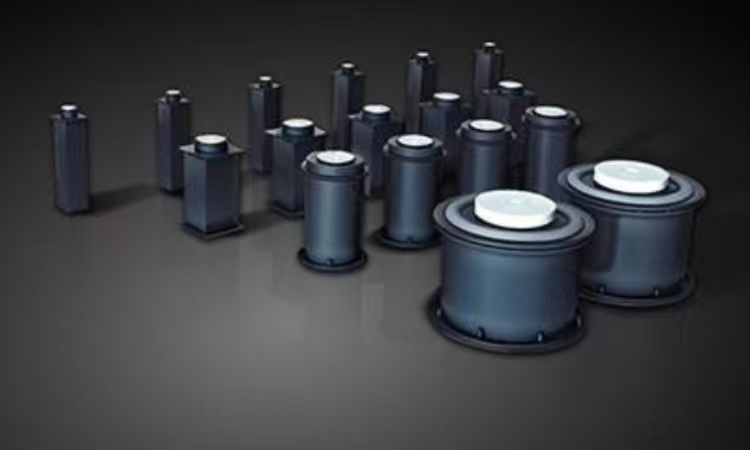
Vibration isolation application in laser interferometry measurement
Sensitivity of Laser Interferometer
Laser interferometers use the principle of light interference for precise measurements, with an accuracy of up to picometers. However, this high sensitivity also makes it extremely sensitive to vibration. Even micrometer level vibration displacement can cause interference fringes to shift, resulting in measurement errors.
Technical matching of isolators
Laser interferometry measurement requires isolators to have excellent horizontal isolation performance. The ZDT-B series isolator is optimized based on the single pendulum principle, with a horizontal natural frequency as low as 1.0-1.5Hz and a 5Hz horizontal isolation efficiency of 88-94%, fully meeting the stringent requirements of laser interferometers.
Key points of system integration
When installing a laser interferometer isolator, the following points should be noted: ensure that the isolator support points are evenly distributed to avoid biased loading; Use a level to accurately level, with an accuracy controlled within 0.05mm/m; Use flexible tubing when connecting the gas source to reduce vibration transmission. LeadTop, as a supplier of vibration isolation optical platforms and accessory products, can provide complete system integration solutions.
Isolation requirements in biomedical research
Stability requirements for microscopic imaging
In biomedical research, devices such as fluorescence microscopes and confocal microscopes require long-term stable observation of cell activity. Vibration can cause focal plane shift, affecting image clarity and accuracy of time-series data. For live cell imaging, stability is even more crucial.
Economical and practical vibration isolation solution
Compared with electron microscopes, biomedical devices have relatively lower requirements for vibration isolation. LeadTop's solid rubber isolator POT-P series is an ideal choice, with a vertical natural frequency of 6.5-12Hz and a horizontal natural frequency of 3-8Hz sufficient to isolate common vibration interference.

Balancing Cost and Performance
The POT-P series isolators have a load coverage of 180-800kg/piece, a recovery time of less than 5 seconds, stable structure, and easy installation. Compared to air floating isolators, rubber isolators have lower costs and require almost no maintenance, making them ideal for budget limited biological laboratories.
Vibration isolation guarantee for precision optical experiments
Vibration Control of Optical Platforms
Precision optical experiments such as holography, spectroscopic analysis, quantum optics research, etc. all require a stable optical platform. As the core component of the optical platform, the isolator directly determines the success rate of the experiment. Vibration can cause optical path deviation and interference fringe jitter, seriously affecting experimental results.
Selection strategy of vibration isolators
When choosing an optical platform isolator, the type of experiment should be considered. For interference experiments, it is recommended to choose air floating isolators; For general optical measurements, rubber isolators can meet the requirements. The automatic leveling function of the ZDT-B series isolator ensures that the optical platform remains level at all times, reducing manual frequency adjustment.
Assessment of Environmental Vibration
Before installing the isolator, it is recommended to conduct a vibration assessment of the laboratory environment. Use vibration sensors to measure the frequency spectrum of ground vibrations and determine the main interference frequencies. Select the appropriate natural frequency isolator based on the evaluation results to achieve the best isolation effect.
The future trend of vibration isolation for scientific research equipment
Intelligent vibration isolation system
With the development of IoT technology, intelligent isolators have gradually become a trend. By integrating sensors and control systems, isolators can monitor vibration status in real-time, automatically adjust isolation parameters, and achieve adaptive isolation.
The popularization of active vibration isolation technology
Active isolators detect vibrations through sensors and use actuators to generate reverse forces for compensation, resulting in better isolation effects than passive isolators. As costs decrease, active vibration isolation technology will be applied in more scientific research fields.
Customized solutions
The demand for vibration isolators varies in different research fields. The future development trend is to provide customized vibration isolation solutions, and design the optimal vibration isolation system based on specific equipment, environment, budget, and other factors. LeadTop has accumulated rich experience in this area.
Conclusion
Vibration isolators are essential key equipment in scientific research experiments, directly affecting measurement accuracy and experimental success rate. From electron microscopes to laser interferometers, from biomedical to precision optics, different types of experiments have different requirements for isolators. By understanding the characteristics and applicable scenarios of various types of isolators, researchers can choose the most suitable isolation scheme. As a professional supplier of vibration isolation optical platforms and accessory products, LeadTop is committed to providing high-quality vibration isolation products and professional technical services to global research institutions, helping scientific research to continuously break through.


