The technological evolution of modern vibration control methods: from single isolation to multimodal control
Modern vibration control methods have formed a hierarchical technical architecture of "passive foundation, active precision improvement, and semi-active cost optimization". Passive control, represented by rubber isolators, laminated rubber supports, etc., has low cost and simple maintenance, but the low-frequency isolation effect is limited; Active control generates a reverse force field through piezoelectric ceramics, electromagnetic actuators, etc., achieving over 90% isolation efficiency in the ultra-low frequency range of 0.1-10Hz; Semi active control balances performance and cost by adjusting the damping coefficient.
The core equipment of modern vibration control methods: the precision and stability revolution of optical platforms
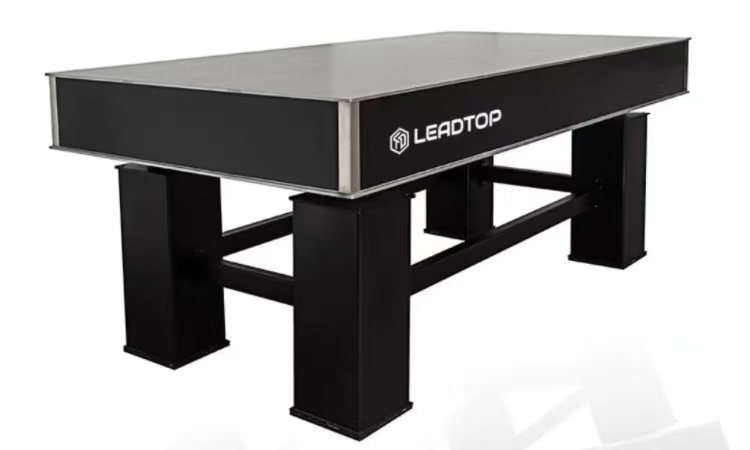
In the field of precision optics, vibration control directly determines the success or failure of experiments. LeadTop's GZT series rigid optical platform adopts a honeycomb platform structure, which controls the flatness at 0.05-0.1mm/㎡ and the surface roughness at only 0.8-1.6 μ m through high-strength lightweight materials and broadband damping coatings, effectively suppressing surface resonance.
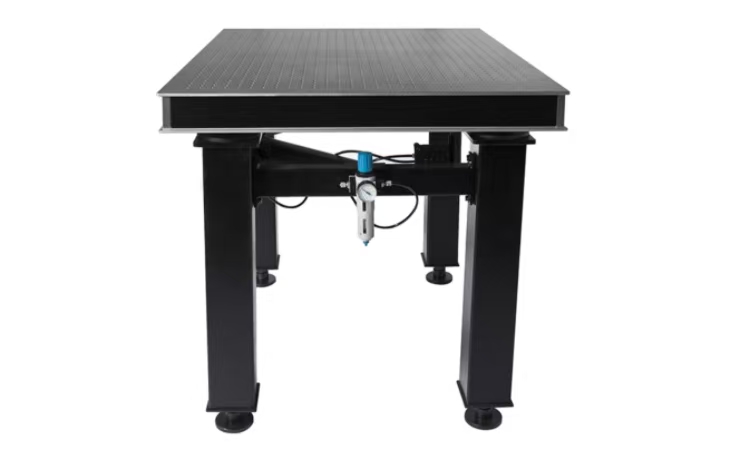
Its ZDT-P series air floating vibration isolation platform has reduced the vertical/horizontal natural frequency to 1.0-2.0Hz, combined with the 86-95% vibration isolation efficiency, to provide nanometer level stable support for laser interferometry. After being adopted by a State Key Laboratory, the optical path drift has decreased from 12 μ m per minute to 0.3 μ m.
Industry application of modern vibration control methods: value extension from laboratory to production line
Modern vibration control methods are driving multiple industries to transition towards "micro vibration sensitive" models.
In semiconductor manufacturing, LeadTop's composite isolation system works in conjunction with an active damping matrix and a passive isolation layer to reduce the vibration transmission rate of wafer inspection equipment from 35% to 3%, significantly improving the yield rate;
In the medical field, the combination of its silent pneumatic system and air flotation vibration isolation technology reduces the operating noise of MRI equipment to less than 50dB, while blocking the interference of environmental vibration on imaging quality. After being adopted by a tertiary hospital, the diagnostic accuracy has increased by 19%.
The development challenges of modern vibration control methods: interdisciplinary integration and cost optimization
Despite significant technological breakthroughs, modern vibration control still faces two major challenges: firstly, interdisciplinary integration is difficult, requiring the integration of knowledge from multiple fields such as materials science, control theory, and mechanical engineering; Secondly, the cost of high-end equipment is high, and the price of active vibration isolation platforms can reach 5-8 times that of traditional solutions.
In the future, with the maturity of new damping materials and intelligent control algorithms, vibration control will develop towards a dual track of "universal" and "ultimate".


