Overview: Evolutionary direction of isolation technology for optical instrument isolation platforms
With the development of optical instruments towards higher precision, isolation platforms need to balance low-frequency isolation, high load stability, and customization requirements. This article analyzes the technological breakthroughs of optical instrument isolation platforms from three aspects: material innovation, structural design, and application scenarios, to assist users in choosing the optimal solution.
1、 Material innovation of optical instrument isolation platform: differentiated application of honeycomb, superconducting magnet and medium carbon steel
LeadTop's solid-state isolation optical platform POT-P series can be made of honeycomb or superconducting magnetic isolation materials. The former is lightweight and cost-effective, while the latter uses magnetic fields to counteract vibrations, making it suitable for electromagnetic sensitive scenarios such as medical and biological applications. The superconducting magnetic materials of the POT-P series have undergone temperature change testing from -20 ℃ to 80 ℃ to ensure stability.

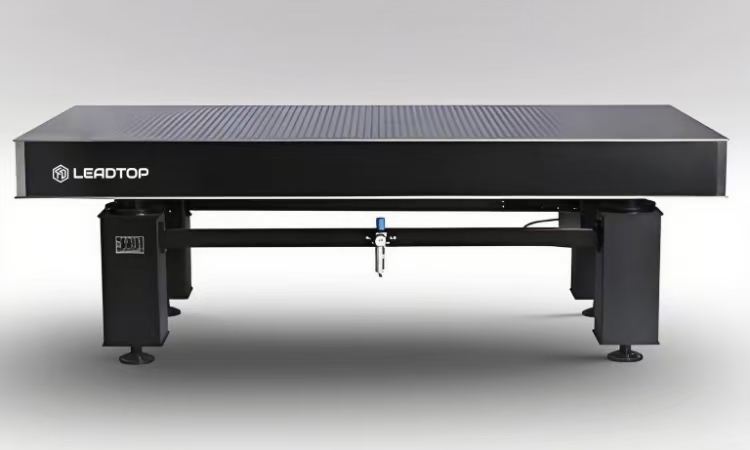
The ZDT-B series of LeadTop's air floating pendulum type uses air springs to achieve low-frequency vibration isolation through gas compressibility, with a horizontal natural frequency as low as 1.0-1.5Hz.
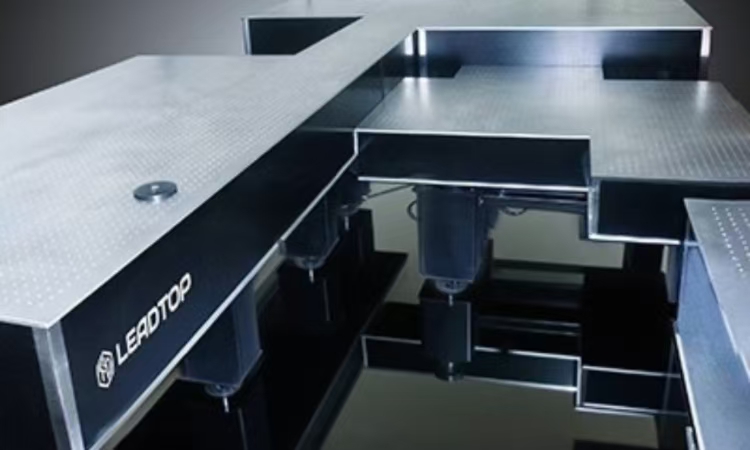
LeadTop's irregular platform platform MOT-Y series uses medium carbon steel plates, which have small load deformation and are suitable for heavy-duty scenarios such as experimental bases.
2、 Structural Design of Optical Instrument Isolation Platform: Synergistic Enhancement of Broadband Damping and Swing Rod Principle
LeadTop's POT-P series utilizes a shear type multi-layer composite rubber isolation structure to convert vibration energy into thermal energy for dissipation. With a vertical natural frequency of 6.5~12Hz, it is suitable for low to medium precision scenarios such as optical path testing.
The ZDT-B series utilizes the principle of a single pendulum and adjusts the horizontal natural frequency through the length of the pendulum rod. The isolation efficiency reaches 99% in the frequency range of 5-10Hz, providing a "zero vibration" environment for laser interferometers.
The MOT-Y series adopts a mesh welding structure with built-in damping materials to suppress resonance while supporting irregular splicing, meeting the customized needs of precision testing. The MOT-Y series of LeadTop has been applied in State Key Laboratory, and its splicing accuracy error is ≤ 0.02mm, which is highly recognized by users.
Overview: The technical drive and stable upgrade of the optical instrument isolation platform
The technological breakthrough of optical instrument isolation platform is reflected in the collaborative optimization of material innovation and structural design. LeadTop covers all scenario requirements from basic to high-end through three major series: POT-P, ZDT-B, and MOT-Y, providing reliable support to users with technical strength.


