In precision optical experiments, even micrometer-level vibrations can distort experimental data. As the core equipment for isolating vibrations, optical instrument isolation platforms employ both active and passive technologies to create an “ultra-stable” environment for applications like quantum optics and laser interferometry.
Passive Isolation: Optical Instrument Isolation Platforms That Combat Vibrations Through Structure
Passive isolation platforms achieve broadband vibration isolation through physical structure, centered on “low natural frequency + high damping.” Their surfaces typically feature honeycomb cores combined with stainless steel/granite composites, internally filled with damping materials like polyurethane to convert vibration energy into dissipated heat. Support legs rely on air springs or rubber isolators.
LeadTop's MOT-F Series honeycomb-core optical platform table employs a broadband damping structure with a honeycomb-type inner core design. The internal honeycomb core consists of trapezoidal thin steel plates bonded together with steel plates sandwiched between them to form a honeycomb shape, maximizing stiffness. This makes it suitable for scenarios demanding high stability, such as optical experiments and precision testing.

Active Vibration Isolation: Optical instrument isolation platforms that counter disturbances with intelligence
Active isolation platforms utilize “sensor + actuator” systems to real-time counteract vibrations across a 0.1-100Hz bandwidth, excelling particularly at suppressing ultra-low-frequency vibrations (0.1-10Hz). Their operating principle resembles noise-canceling headphones: sensors capture vibration signals, triggering electromagnetic actuators to generate counteracting forces within milliseconds, reducing vibrations to less than 1% of their original amplitude.
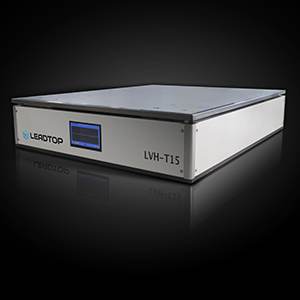
LeadTop's LVH-T15 heavy-duty active vibration isolation platform is specifically engineered for TEM/SEM applications. It employs a hybrid technology combining electromagnetic actuators with four-stage air springs to achieve full-bandwidth six-degree-of-freedom vibration suppression from 1-200Hz, eliminating building sway interference between 0.5-5Hz. With an exceptional 500kg load capacity, it serves as the ideal vibration isolation solution for heavy-duty precision instruments.
Optical Instrument Isolation Platform Selection Guide
Three key factors must be comprehensively considered during selection:
Faraday cage structures are essential in strong electromagnetic environments. LeadTop supports customization services for surface materials, hole spacing, and damping layers.
From passive platforms' “structural vibration resistance” to active platforms' “intelligent vibration cancellation,” optical isolation platforms are meeting diverse demands through increasingly refined technical distinctions. Brands like LeadTop leverage modular design and customization services to ensure precision and stability transcend environmental limitations.


