Shock absorber spring: the "first line of defense" for equipment stability
Equipment vibration is an issue that cannot be ignored in various stages of industrial production. It not only affects machining accuracy and leads to a decrease in product quality, but may also cause structural fatigue fracture, shorten the service life of equipment, and increase production costs for enterprises. As the "first line of defense" for stable operation of equipment, shock-absorbing springs can disperse vibration energy in multiple directions through their unique elastic buffering effect, avoiding local stress concentration and effectively protecting equipment from vibration damage.
Taking the automotive suspension system as an example, the spiral shock absorber spring and shock absorber rubber pad work together to form an efficient shock absorber system. When a car is driving on the road, the impact force generated by uneven road surface will be transmitted to the suspension system through the wheels.
The spiral shock-absorbing spring absorbs some of the impact energy through its own elastic deformation, while the shock-absorbing rubber pad further buffers and attenuates the vibration, allowing the car to travel smoothly and reducing 80% of road impact, greatly improving driving comfort. The application of high-precision shock-absorbing springs is equally crucial in data center generator sets. It can reduce the vibration transmission rate to below 5%, providing a stable operating environment for servers and ensuring the security and stable transmission of data.
Selection logic: Triangle balance rule of shock absorber spring
When selecting shock-absorbing springs, it is necessary to comprehensively consider multiple factors such as equipment weight, vibration frequency, and installation environment to achieve a triangular balance among the three. For equipment such as heavy-duty vibrating screens, due to the large load they bear during operation, it is necessary to choose shock-absorbing springs with strong load-bearing capacity. It is recommended to use steel shock absorber springs with a bearing capacity of 35040N, which can provide sufficient support to ensure the stability of the equipment during operation.
For precision instruments, their sensitivity to vibration is high, and airbag shock absorber springs with natural frequencies below 2Hz need to be selected. The airbag shock absorber spring has good flexibility and vibration isolation performance, which can effectively isolate low-frequency vibrations and provide a stable working environment for precision instruments.
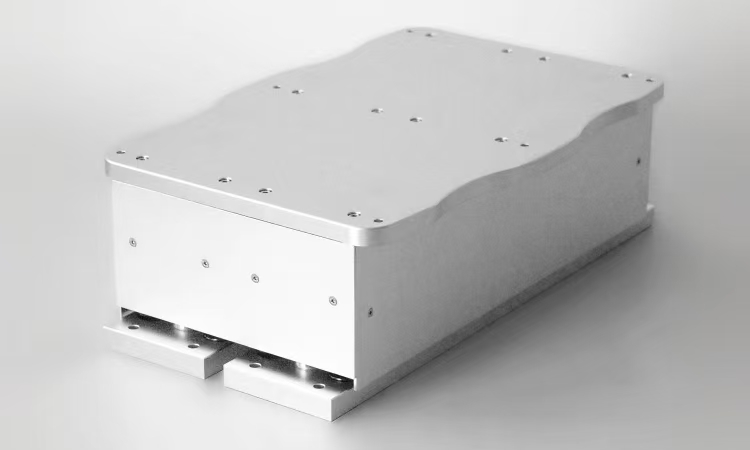
LeadTop's VCM-D400 active isolation strip adopts multi degree of freedom active compensation technology, breaking through the 1Hz ultra-low frequency isolation limit, achieving six degree of freedom decoupling compensation (horizontal to vertical ratio error<0.5%), and automatic correction of dynamic load ± 30% fluctuations. Carrying 200-600kg, isolation efficiency>90% @ 5Hz,>95% @ 10Hz, fast response in 20ms, table stability<0.3 μ m/√ Hz (150Hz frequency band). Specially designed for laser interferometers to achieve sub micron level phase stability, suitable for the fields of nanometrology and precision manufacturing.
Maintenance Strategy: The Key to Extending the Life of Shock Absorber Springs
During long-term use, shock-absorbing springs are prone to metal fatigue or rubber aging due to various factors, leading to performance degradation or even failure. Therefore, regular maintenance and inspection are crucial. It is recommended to check the displacement of the shock absorber spring every quarter and use a laser vibrometer to monitor its natural frequency changes. Through these data, it is possible to timely understand the working status of the shock absorber spring, identify potential problems, and handle them in a timely manner.
For hydraulic shock absorption systems, it is also necessary to regularly replace damping oil and clean the piston surface. The quality and cleanliness of damping oil directly affect the performance of hydraulic shock absorption systems, and regular replacement and cleaning can ensure the normal operation of the system. LeadTop provides full lifecycle services, and its intelligent diagnostic platform can remotely analyze equipment vibration data. By analyzing and processing a large amount of data, it is possible to provide a 6-month advance warning of the need for shock absorber spring replacement, helping enterprises to arrange maintenance plans reasonably, reduce unplanned downtime risks by 70%, and improve production efficiency.
Industry Breakthrough: LeadTop Shock Absorber Springs Redefine Standards
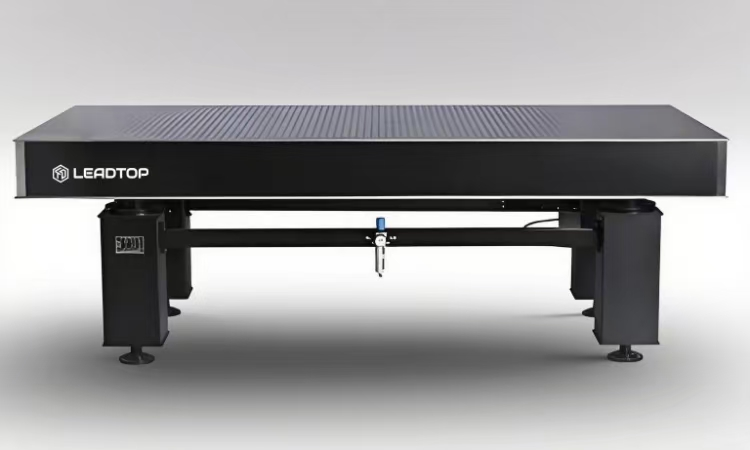
With the increasing demand for vibration control in the semiconductor industry, nanoscale precision has become a new goal for industry development. Faced with this challenge, LeadTop actively invested in research and development, and innovatively launched a cellular structure optical platform. The platform adopts a unique honeycomb structure design, which controls the flatness error within 0.05mm/m2, providing a high-precision installation foundation for semiconductor equipment.
The ZDT-B series pendulum type vibration isolation platform reduces the horizontal natural frequency to 1.0Hz by optimizing the layout of air damping springs. This high-performance damping spring component has become the core component of equipment such as lithography machines and microscopes, effectively solving the strict control problem of vibration in the semiconductor industry during ultra precision manufacturing, promoting China's precision manufacturing to break through international technical barriers, and enhancing China's competitiveness in the global semiconductor industry.