Introduction to Vibration Isolation Technologies
Vibration isolation is essential for protecting sensitive equipment from disruptive mechanical noise. Two primary methods dominate the market: spring mount vibration isolators (passive systems) and active vibration control platforms (smart systems). While spring mounts rely on physical components like metal springs and rubber dampers, active solutions use real-time sensors and actuators to counteract vibrations dynamically. This article compares these technologies, highlighting their strengths and applications, with a focus on the LeadTop TA800 Active Vibration Isolation Table as a cutting-edge example.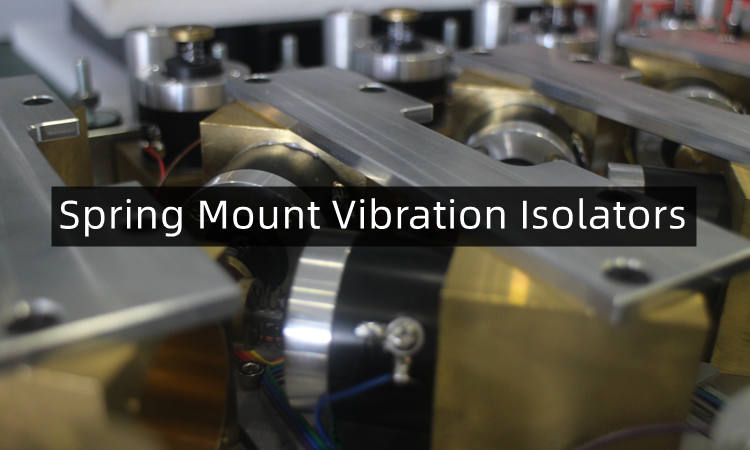
Spring Mount Vibration Isolators: Simple yet Effective
Spring mounts are cost-effective and reliable for mid-to-low-frequency vibration isolation (5–100 Hz). They work by absorbing energy through spring compression and rubber deformation, making them ideal for industrial machinery like HVAC systems, generators, and CNC machines. However, their passive nature limits performance in dynamic environments—they cannot adapt to sudden shocks or ultra-low-frequency vibrations (below 5 Hz). Additionally, most designs struggle to suppress rotational or multi-directional vibrations simultaneously.
Active Vibration Control: Precision Meets Intelligence
Active systems like the LeadTop TA800 overcome passive limitations by integrating sensors, actuators, and algorithms. The TA800 uses a hybrid active-passive design to achieve 6-degree-of-freedom (6DoF) vibration suppression across 1–200 Hz, with >95% efficiency at 10 Hz. Key features include:
200 kg load capacity for heavy equipment like wafer inspection systems.
30-second auto-leveling and 10–20 ms response time to maintain stability during experiments.
Compact aerospace-grade aluminum body for space-constrained labs.
This makes it indispensable for quantum computing, femtosecond lasers, and other ultra-precision fields.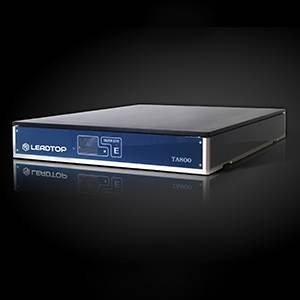
For budget-conscious projects with stable vibration sources, spring mounts remain a practical choice. However, industries demanding nanometer-scale stability—such as semiconductor manufacturing or quantum research—must prioritize active systems like the TA800. By combining passive resilience with AI-driven adaptability, active platforms redefine what’s possible in vibration isolation, ensuring breakthroughs in cutting-edge science and engineering.


