The Essence of Equipment Vibration Isolation Measures: Creating a Vibration “Buffer Zone”
The core of equipment vibration isolation measures lies in forming a flexible isolation layer between the vibration source and the equipment through elastic components and damping structures. When the vibration frequency exceeds √2 times the system's natural frequency, the isolation system effectively attenuates energy transmission.
Passive Vibration Isolation: Cost-Effective Equipment Vibration Measures
Passive isolation relies on the inherent elastic properties of materials, suitable for isolating medium-to-high frequency vibrations. LeadTop's ZDT-P series air-bearing optical platforms utilize air springs and ultra-thin composite airbag structures, combined with multi-pore quasi-laminar flow damping technology. This achieves vertical/horizontal natural frequencies of 1.0–2.0 Hz and vibration isolation efficiency of 78–95% in the 5–10 Hz frequency band.

Active Vibration Isolation: Intelligent Defense Against “Low-Frequency Intrusion”
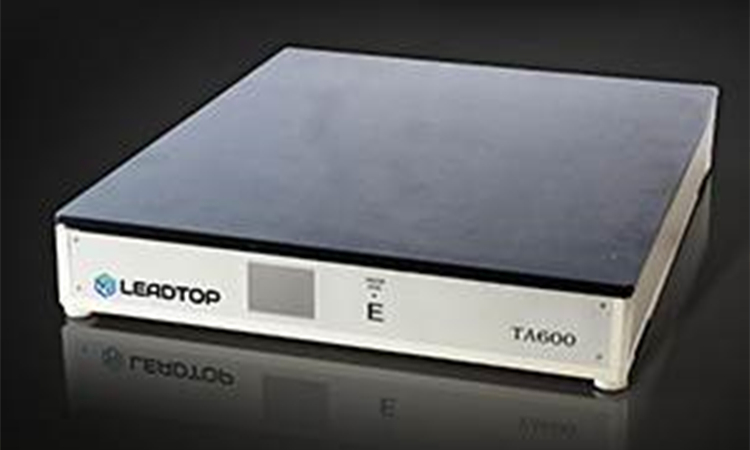
For vibrations spanning 1-200Hz, passive isolation proves limited, necessitating active control technology. LeadTop's TA600 desktop active isolation table employs a composite design of active damping matrices and passive isolation layers to achieve six-degree-of-freedom vibration suppression. Its 30-second dynamic leveling and 10-20ms response time perfectly accommodate desktop SEMs, confocal microscopes, and similar equipment.
As an industry innovation leader, LeadTop's product line encompasses comprehensive solutions including air-bearing platforms and active vibration isolation tables. This not only enables seamless integration from laboratories to production lines but also lowers user barriers through intelligent adaptive technology. Each enhancement in isolation efficiency fuels development momentum for cutting-edge fields like precision inspection and quantum computing.


