Vibration isolation equipment: The "invisible guardian" in precision scenarios
Vibration isolation equipment minimizes the impact of environmental vibration on precision instruments through physical barriers or active control technology, and is widely used in fields such as scientific research, healthcare, and industry. Its core value lies in ensuring equipment stability and avoiding data errors or equipment damage caused by vibration.
This article will analyze two representative products from the LeadTop brand - the LHV active vibration isolation module and the GZT rigid optical platform, to help you accurately match your needs.
Active vibration isolation equipment: a "dynamic shield" for nanoscale scenarios
The LHV active vibration isolation module adopts an air spring + single pendulum decoupling design, combined with six-degree-of-freedom precision active control, achieving a low-frequency vibration transmission rate of ≤-30dB from 0.5 to 20Hz, a rapid response time of 8ms, and an impact resistance of 25g.
Its intelligent load adaptive function (0.5-5ton) can automatically adjust parameters and supports ±2μm displacement compensation, ensuring ultra-stable operation of nanoscale equipment in scenarios such as quantum research and acoustic laboratories. LeadTop's modular design allows users to flexibly expand according to their needs, balancing performance and cost.

Passive vibration isolation equipment: a cost-effective "static foundation"
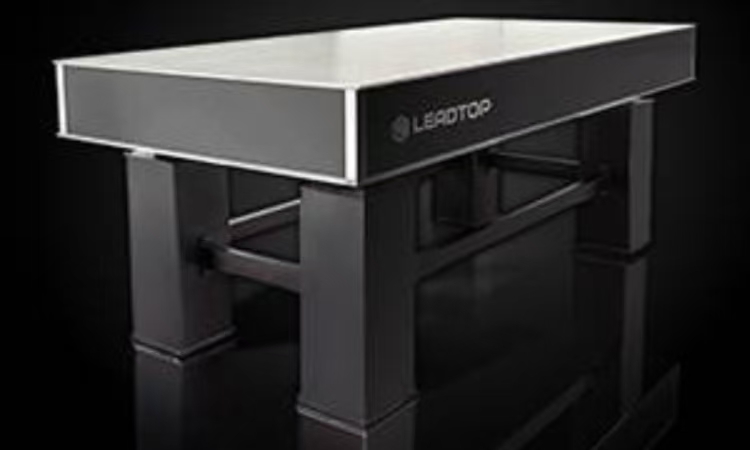
The rigid optical platform GZT series is centered around a broadband damping structure tabletop, with options for honeycomb or superconducting magnetic vibration isolation tabletops, providing high strength, stability, and reliability. The platform stands at a height of 800mm and supports manual leveling (with an adjustment range of ±10mm).
The tabletop boasts a flatness of 0.05-0.1mm/㎡ and a surface roughness of only 0.8-1.6μm, making it suitable for scenarios such as optical target experiments and long-distance aiming that do not require high vibration isolation. LeadTop provides movable casters for the GZT, balancing structural stability and operational convenience, making it an ideal choice for laboratory infrastructure.
Vibration isolation equipment selection advice: scenario-driven, precise matching
If high-frequency dynamic vibration (such as in quantum experiments) needs to be addressed, the active control technology of the LHV active vibration isolation module offers more advantages; if static stability and cost-effectiveness are pursued (such as in basic optical experiments), the broadband damping design of the GZT rigid optical platform is more suitable. Through technological integration, LeadTop provides users with a full-scenario vibration isolation solution ranging from nanometer to micrometer levels.


