Vibration Isolation Equipment: Critical Role Across Industries
As precision manufacturing and scientific research advance toward higher precision, vibration control has become one of the key bottlenecks constraining technological breakthroughs. Vibration isolation equipment, serving as the "buffer barrier" connecting vibration sources and precision equipment, plays an irreplaceable role in cutting-edge fields such as semiconductor manufacturing, optical inspection, and quantum computing. This article systematically explains technical points and selection strategies for vibration isolation equipment across three typical application scenarios.
Vibration Isolation Equipment Application One: Semiconductor Wafer Inspection
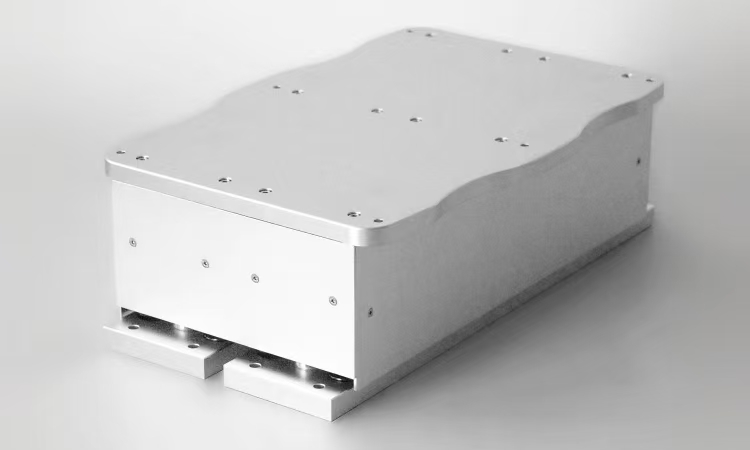
In semiconductor manufacturing, wafer inspection equipment imposes extremely stringent requirements on vibration environments. Lithography alignment, defect detection, and film thickness measurement processes typically achieve nanometer-level positioning and measurement precision. Any minute vibration interference may cause misjudgment or rework. Vibration isolation equipment in wafer inspection applications needs to address two key issues: isolating ground vibration transmission to equipment, and suppressing vibration from equipment's own moving components. The TA800 tabletop active vibration isolation platform, with its compact aerospace aluminum body design, can be conveniently integrated beneath inspection equipment, with six-degree-of-freedom vibration suppression ensuring tabletop stability in all directions.

Vibration Isolation Equipment Application Two: Laser and Optical Precision Measurement
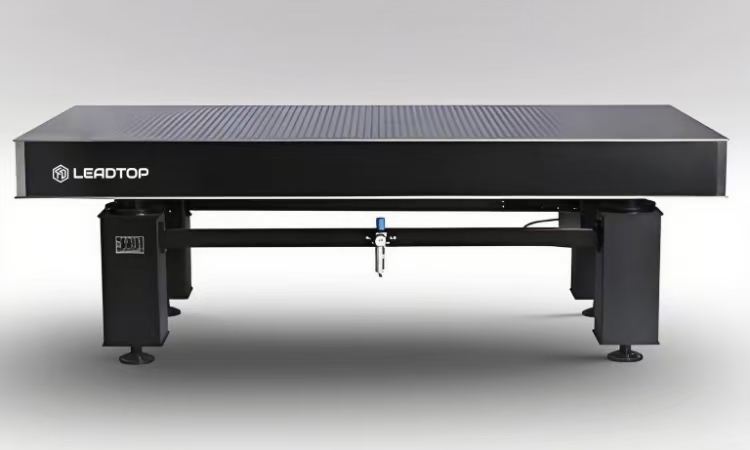
Equipment such as laser interferometers, femtosecond laser systems, and optical profilers are highly sensitive to vibration during operation. In laser interferometry, vibration causes optical path length fluctuations, directly affecting phase measurement precision and system stability. Vibration isolation equipment in such applications, besides providing efficient vibration isolation, must ensure optical platforms have sufficient flatness and surface quality. The ZDT-B series air-bearing pendulum-type vibration isolation optical platform is specifically designed for optical applications, with tabletop flatness reaching 0.05-0.1mm per square meter and surface matte treatment reducing stray light interference.
Vibration Isolation Equipment Application Three: Quantum Technology and Nanometrology
Frontier fields such as quantum computing, quantum communication, and nanometrology present unprecedented challenges for vibration control. Quantum bit coherence times and nano-probe positioning precision are directly affected by vibration environment—sub-micrometer vibration may render precision experiments futile. Vibration isolation equipment in such applications needs to break through traditional passive isolation's low-frequency bottleneck. The VCM-D400 active isolation bar employs multi-degree-of-freedom active compensation technology, breaking through the 1Hz ultra-low frequency isolation limit, with six-degree-of-freedom decoupled compensation ensuring transverse-to-longitudinal ratio error less than 0.5% and tabletop stability better than 0.3 micrometers per root hertz (150Hz band).
Vibration Isolation Equipment Application Four: Industrial Precision Manufacturing Vibration Control
In precision machining and high-end manufacturing, vibration directly affects processing precision and product yield. Ultra-precision grinding, micro-EDM, precision injection molding and other processes all require stable equipment foundation. Vibration isolation equipment in industrial applications, besides technical performance, must consider factors such as reliability, maintenance convenience, and service life. The VCM-D400 isolation bar employs redundant dual-DSP control systems, maintaining basic isolation function even if single controller fails, significantly improving system reliability.
Vibration Isolation Equipment Selection Summary and Industry Outlook
Synthesizing the above application scenario analysis, vibration isolation equipment selection should be tailored to industry characteristics and specific requirements. Semiconductor and quantum technology fields should prioritize active isolation equipment, focusing on low-frequency performance and six-degree-of-freedom control capability. Optical measurement fields need to balance isolation performance with platform precision. Industrial manufacturing fields should emphasize equipment reliability and maintenance convenience. As a professional supplier of vibration isolation optical platforms and accessory products, LeadTop is committed to providing customers with vibration isolation equipment solutions covering full application scenarios.


