Vibration isolation springs isolate vibration transmission through elastic deformation, and their performance parameters (such as natural frequency and damping ratio) need to be accurately matched with equipment requirements. This article starts from the selection logic and combines typical scenarios to analyze how to achieve efficient vibration isolation through vibration isolation springs.
Core parameters of vibration isolation springs: key indicators determining vibration isolation performance
The natural frequency is the core indicator of a spring's isolation capability, and the lower the frequency, the wider the isolation range. For example, LeadTop's ZDT-B series swing rod air floating isolator optimizes the horizontal natural frequency to 1.0-1.5Hz and the vertical frequency to 1.0-2.0Hz through a single swing structure, effectively isolating vibrations above 5Hz. It is suitable for equipment such as laser interferometers that require ultra-low frequency isolation.
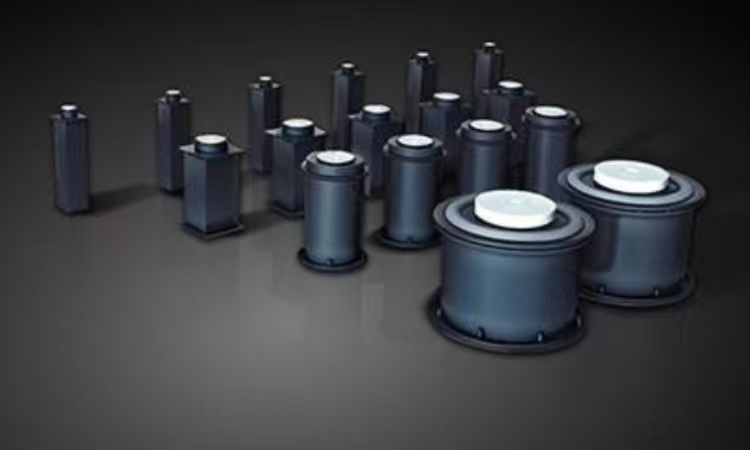
Damping Design of vibration isolation springs: A "Safety Valve" for Suppressing Resonance
The damping ratio affects the resonance response of the spring. LeadTop uses an external adjustable damper in the ZDT-P series of ordinary air floating vibration isolators. Users can dynamically adjust the damping according to the vibration characteristics of the equipment to avoid the risk of resonance amplification. Its ultra-thin airbags, combined with high-precision pneumatic systems, achieve automatic leveling and silent operation, meeting the demanding requirements of microscopes and other scenarios.

Scene adaptation of vibration isolation springs: full coverage from laboratory to production line
The demand for vibration isolation varies significantly among different devices. For example, biological microscopes need to suppress micro vibrations of 0.5-100Hz, while industrial detection equipment needs to cope with more complex low-frequency impacts.
LeadTop provides a full scenario solution from the ZDT-B series (ultra-low frequency isolation) to the ZDT-P series (universal isolation) through modular design, and its product matrix covers fields such as optics, semiconductors, aerospace, etc.
The selection of vibration isolation springs requires comprehensive consideration of frequency, damping, and scene requirements. LeadTop, with its parametric design tools and customized services, helps users quickly match the optimal vibration isolation solution. Its products have become the preferred brand for precision equipment vibration isolation with high stability and low maintenance costs.


