Vibration reduction technology: a leap from passive to active
Vibration reduction technology is the core means to ensure the stable operation of precision equipment, and its development has gone through a leap from passive vibration reduction to active vibration reduction. Traditional passive vibration reduction relies on materials such as springs and rubber to absorb vibration energy, but it is difficult to cope with low-frequency vibration interference. Active vibration reduction, through real-time monitoring of vibration signals by sensors, drives electromagnetic actuators to generate reverse force, achieving precise vibration reduction effect of "dynamic braking".
For example, LeadTop's LVH-T15 heavy-duty active vibration isolation platform uses electromagnetic actuators and four stage air spring composite technology to achieve six degrees of freedom vibration suppression in the 1-200Hz frequency band, with a vibration reduction efficiency of over 90% in the 5Hz frequency band. It provides sub nanometer level stability for heavy-duty scenarios such as cryo electron microscopes and FIB equipment, becoming a benchmark in the field of high-precision vibration reduction.

Passive Vibration Reduction: Classic and Limitations Coexist
Passive vibration reduction is known for its low cost and high reliability, and is widely used in fields such as automotive suspension and building vibration reduction. The principle is to consume vibration energy through material deformation, but the natural frequency is high, and the damping effect on low-frequency vibrations (such as personnel movement and equipment operation) is limited.
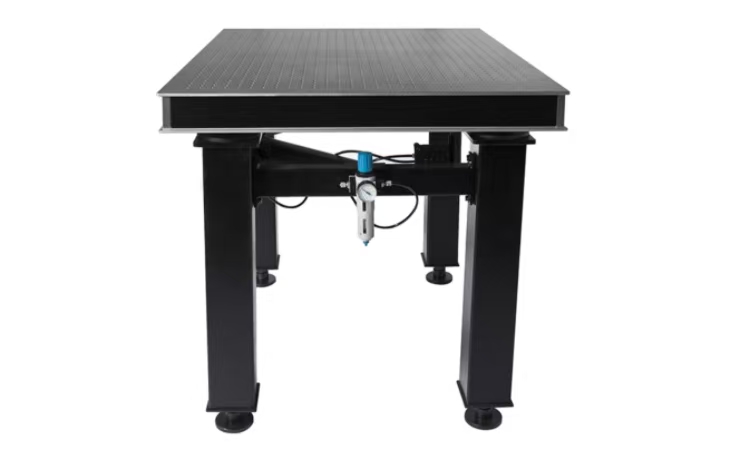
For example, traditional rubber vibration isolation pads still have a transmission rate of 80% in the 5Hz frequency band, while LeadTop's air floating vibration isolation optical platform ZDT-P series reduces the natural frequency to 1.0Hz through air springs, resulting in a vibration reduction transmission rate of only 3% in the 5Hz frequency band, significantly improving vibration reduction performance and becoming the preferred vibration reduction solution for semiconductor manufacturing, laser interferometry, and other scenarios.
Active Vibration Reduction: Intelligent and Accurate Future
Active damping optimizes control logic through AI algorithms to achieve dynamic damping. For example, LeadTop's TA800 desktop active vibration isolation platform is equipped with an accelerometer and intelligent controller, which can adjust the air spring pressure in real time and stabilize the device vibration amplitude within ± 0.1 μ m. Its response speed of 10ms can even counteract sudden vibration interference, meeting the stringent requirements for vibration reduction in quantum experiments, ultra precision machining and other scenarios. With the development of IoT technology, active vibration reduction is moving towards the stage of "predictive vibration reduction", providing infrastructure level vibration reduction support for intelligent laboratories.


