Vibration and Noise Control: The Invisible Challenge in Modern Industry
Vibration and noise control are critical technologies for ensuring the stable operation of precision equipment. In fields such as semiconductor manufacturing and optical measurement, even minute vibrations or noise can lead to experimental errors or equipment failures. How to achieve efficient vibration isolation through structural optimization and material innovation has become a key challenge for engineers.
Vibration and Noise Control Based on the Single Pendulum Principle
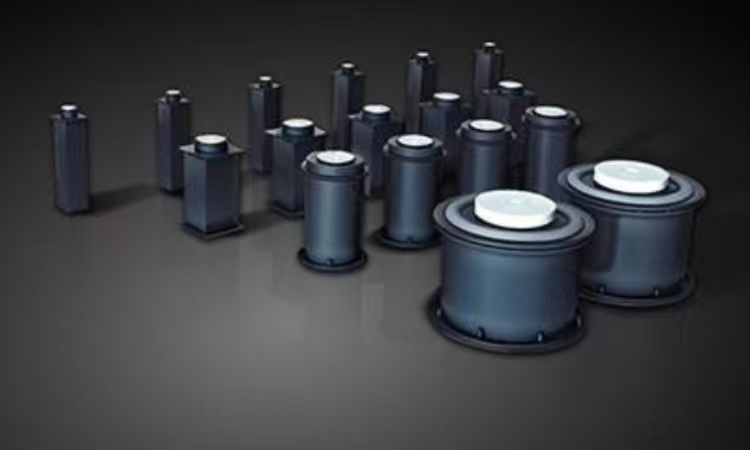
LeadTop's ZDT-B Series pendulum-type air-bearing isolators combine ultra-thin composite air chambers with a single pendulum structure, optimizing horizontal natural frequencies to 1.0-1.5Hz and vertical frequencies to 1.0-2.0Hz. Its external damper dynamically adjusts system stiffness, achieving vertical/horizontal isolation efficiencies of 86-92% and 88-94% respectively at 5Hz. Automatic leveling and silent operation make it ideal for laser interferometers and high-precision microscopes.
Universal Solution for Vibration and Noise Control
For conventional precision equipment, LeadTop's ZDT-P Series standard air-bearing isolators utilize a high-precision pneumatic system with adjustable dampers to achieve automatic leveling and low-noise operation. Vertical/horizontal isolation efficiencies reach 82-88% and 85-90% respectively at 5Hz, and casters can be configured for easy mobility. Widely applied in fields like biological microscopes and electron microscopes, this series balances performance and cost requirements.

Technological Convergence in Vibration and Noise Control
Future vibration and noise control will evolve toward intelligent solutions. LeadTop is developing AI-algorithm-based active isolation systems that monitor vibration spectra in real time and dynamically adjust damping parameters to achieve sub-hertz vibration suppression. This technological innovation may redefine stability standards in precision manufacturing.


