1、 The physical mechanism of vibration transmission
When equipment vibration propagates through solid structures, energy attenuation is slow, especially in the low-frequency range (1-10 Hz) where isolation is difficult. For example, when observed under a microscope, a 0.1mm tabletop vibration can cause image blurring and affect experimental results.
2、 Two major paths of equipment vibration isolation and noise reduction technology
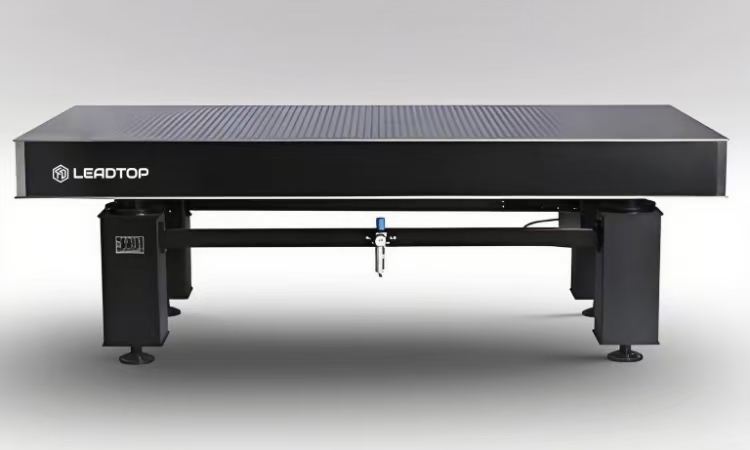
Passive isolation relies on the energy storage and dissipation characteristics of elastic components such as springs and airbags, while active isolation dynamically compensates for vibrations through sensors and actuators. LeadTop's ZDT-B series air floating pendulum type vibration isolation optical platform innovatively adopts an air spring+pendulum structure, using the principle of a single pendulum to reduce the horizontal natural frequency to 1.0-1.5Hz (vertical 1.0-2.0Hz), with a vibration isolation efficiency of 86-99% (5-10Hz), achieving ultra-low frequency and high-efficiency vibration isolation.
3、 Product design and application scenarios for equipment vibration isolation and noise reduction
The ZDT-B series supports pneumatic automatic leveling and ± 10mm height adjustment, equipped with a silent air compressor (<50dB), a tabletop flatness of 0.05-0.1mm/㎡, and a matte surface treatment to reduce light interference. The swing rod structure significantly reduces horizontal vibration by extending the vibration transmission path and combining it with the linear elastic properties of air springs. This platform is suitable for precision scenes such as microscopes and laser interferometry, providing an ultra stable operating environment for high-precision equipment.
4、 Summary: Industry value of equipment vibration isolation and noise reduction technology
In fields such as semiconductor manufacturing and biomedicine, equipment vibration isolation and noise reduction are key to ensuring accuracy. LeadTop breaks through the low-frequency bottleneck of traditional vibration isolation technology by combining the principle of pendulum and air spring design, providing a better solution for the industry.
In the future, with the development of materials science and control technology, vibration isolation platforms will evolve towards higher precision and easier maintenance, helping to upgrade the industry.


