Vibration isolators mitigate mechanical disturbances by altering energy transmission pathways. Through material science and dynamic adjustments, these systems protect sensitive equipment from external vibrations. This guide explores their operational principles, passive/active mechanisms, and real-world uses while highlighting LeadTop’s expertise in precision vibration control.

Isolators function by converting kinetic energy into heat or storing it temporarily. Passive systems rely on elastomers (e.g., rubber) or pneumatic springs to absorb shocks, while active systems use real-time feedback to generate counter-vibrations. The key is achieving a natural frequency 3-5 times lower than the disturbance source. LeadTop’s designs optimize this ratio for maximum efficiency.
Passive Isolation: Uses material deformation to dampen vibrations. Ideal for steady-state disturbances (e.g., machinery hum). LeadTop’s conical spring isolators reduce resonance in industrial settings.
Active Isolation: Employs actuators and sensors to predict and cancel vibrations. Critical for transient events (e.g., seismic activity). LeadTop’s hybrid systems merge passive reliability with active precision.
Laboratory Stabilization: Passive isolators suppress floor vibrations for atomic force microscopes.
Aerospace Testing: Active systems simulate turbulence conditions while isolating test equipment.
Architectural Protection: LeadTop’s barrier isolators block subway-induced vibrations in urban buildings.
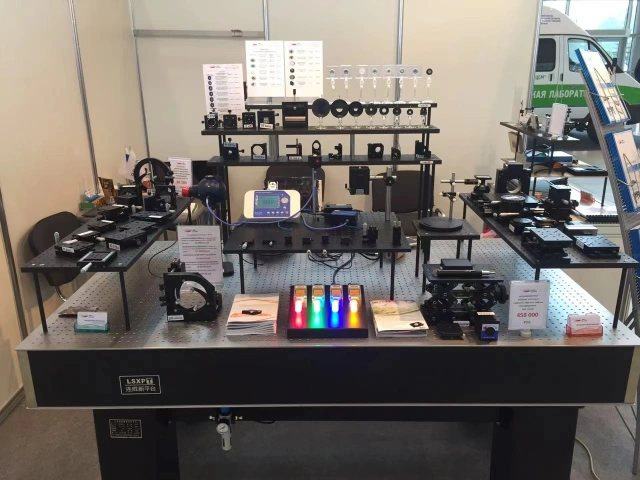
High-Damping Alloys: Used in LeadTop’s industrial isolators to withstand heavy loads.
Air Spring Technology: Provides adjustable stiffness for multi-axis vibration control.
Composite Structures: Merge rubber and metal for optimal stiffness-to-weight ratios.
Transmissibility: Ratio of output to input vibration. Ideal isolators achieve <10% transmissibility at critical frequencies.
Natural Frequency: Passive systems typically operate at 2-5 Hz; active systems extend below 1 Hz.
Load Range: LeadTop’s modular designs support 50 kg to 5-ton payloads.
Vibration isolators employ energy conversion and dynamic counteracting to protect equipment. By selecting passive/active systems based on disturbance type and environmental conditions, users achieve optimal stability. LeadTop’s innovations—from high-damping alloys to hybrid control algorithms—ensure precision across scientific and industrial applications.


