You have bought the precision instrument, completed installation and commissioning, and turned it on—yet the data are still drifting.
The problem is often not with the equipment itself, but with the ground beneath it. The inherent sway of the building, the operation of equipment next door, and even the slight vibration of air conditioning ducts are continuously transmitted to the instrument through the ground. You have spent hundreds of thousands on equipment, only to let it work on a constantly moving "boat."
An air-float vibration isolation platform solves this problem: it creates an extremely thin air film between the instrument and the ground, allowing vibrations to "soft-land" under the cushioning of air. Compared with spring and rubber isolation, it can handle the more troublesome low-frequency vibrations—those 0.5–5 Hz building sways and pedestrian movements that give you the biggest headache are precisely the strong suit of air-float isolation.
This article provides an in-depth breakdown of the working principle of air-float isolation, compares its advantages and disadvantages with spring/rubber passive isolation, and gives clear selection recommendations. The specific product series listed (ZDT-P, ZDT-B) are all from the actual product line of LeadTop, and readers may use them directly as a reference for selection.
Conclusion first: The core of an air-float vibration isolation platform is the air spring system. Several air film elements are installed at the bottom of the platform. After charging with constant-pressure compressed air, an extremely thin (typically 0.01–0.05 mm) air film forms between the elements and the foundation. The air film completely separates the platform from the foundation, and the vibration transmission path is "softened" by the compressibility of air, thereby achieving vibration isolation. The LeadTop ZDT-B series goes further, combining the pendulum principle to achieve ultra-low natural frequency: vertical 1.0–2.0 Hz, horizontal 1.0–1.5 Hz, with isolation efficiency up to 99%. Simply put, it lets the equipment "float" on air to work—however the ground moves, the air film cushions it, and the equipment stays still.
Step-by-Step Analysis of Air-Float Isolation Working Principle
|
Step |
Process |
Function |
|
Inflation |
Compressed air enters the air film element through the air hose |
Establish air film support |
|
Air film formation |
A 0.01–0.05 mm air film forms between the element and the foundation |
Completely separate the tabletop from the foundation |
|
Suspension state |
The tabletop is suspended by air film pressure |
Eliminate mechanical contact friction |
|
Vibration transmission |
Vibration is softened and transmitted through air compressibility |
Achieve vibration isolation effect |
LeadTop Air-Float Isolation Platform Technical Solutions
|
Product Series |
Type |
Natural Frequency |
Isolation Efficiency |
Core Technology |
|
ZDT-P Series |
Air-float isolation |
1.0–2.0 Hz |
95% |
Multi-orifice quasi-laminar flow damping technology |
|
ZDT-B Series |
Air-float pendulum type |
Horizontal 1.0–1.5 Hz / Vertical 1.0–2.0 Hz |
99% |
Pendulum principle + air-float |
Air Film Element Technical Key Points
|
Technical Indicator |
Description |
LeadTop Level |
|
Air film thickness |
0.01–0.05 mm |
Guaranteed by precision machining |
|
Load capacity |
Determined by element quantity and area |
Full series coverage |
|
Air source requirement |
Constant pressure 0.4–0.6 MPa |
MD series air compressor配套 |
|
Sealing design |
High-quality sealing rings, extremely low leakage rate |
Negligible in daily use |
Conclusion first: The core difference between air-float isolation and passive isolation lies in natural frequency and isolation mechanism. The natural frequency of traditional spring isolators is determined by spring stiffness and mass; reducing it below 5 Hz requires very large mass and very soft springs, which is difficult to achieve in engineering. The stiffness of an air-float system is controlled by the air film compression rate, enabling extremely low natural frequency without sacrificing load capacity. In one sentence: if the equipment is sensitive to vibrations below 5 Hz, air-float is the only choice.
Air-Float Isolation vs. Passive Isolation Comparison Table
|
Comparison Dimension |
Air-Float Isolation (LeadTop ZDT Series) |
Spring/Rubber Passive Isolation |
|
Natural frequency |
1–2 Hz (extremely low) |
4–12 Hz (relatively high) |
|
Isolation starting point |
Effective isolation from 1 Hz |
Isolation starts above natural frequency |
|
Low-frequency performance (<5 Hz) |
Excellent, can isolate |
May amplify vibration |
|
Isolation efficiency |
95%–99% |
60%–90% |
|
Friction loss |
No friction (air film support) |
With friction (mechanical contact) |
|
Wearing parts |
None |
Springs and rubber age |
|
Leveling method |
Pneumatic automatic leveling |
Manual leveling bolts |
|
Maintenance requirement |
Low (need to keep air source clean) |
Medium (check spring/rubber condition) |
|
Application scenario |
Precision optics, semiconductors, high-precision inspection |
General precision equipment, general industry |
Low-Frequency Vibration Handling Capability Comparison
|
Vibration Type |
Frequency Range |
Air-Float Isolation Effect |
Passive Isolation Effect |
|
Building inherent vibration |
0.5–10 Hz |
Effective isolation |
May amplify |
|
Pedestrian movement |
3–8 Hz |
Effective isolation |
Unstable effect |
|
Elevator operation |
Intermittent low frequency |
Effective isolation |
Cannot isolate |
|
Ground traffic |
1–50 Hz |
Full-band isolation |
Partial isolation |
Air-Float Isolation vs. Passive Isolation Selection Decision Tree
Equipment vibration-sensitive frequency band
↓
< 5 Hz low-frequency vibration sensitive
↓
Yes → Air-float isolation (ZDT series) or active isolation (TA series)
↓
5–20 Hz medium-frequency vibration sensitive
↓
Yes → Air-float isolation (ZDT series) or passive isolation (depending on budget)
↓
> 20 Hz high-frequency vibration sensitive
↓
Yes → Passive isolation (limited budget) or air-float isolation (high precision)
↓
Limited budget, general equipment → POT series passive isolation (cost-controlled)
Sufficient budget, high-precision requirement → ZDT series air-float isolation
Conclusion first: The four core advantages of air-float vibration isolation platforms are ultra-low natural frequency, frictionless support, automatic leveling, and high isolation efficiency. Natural frequency can reach 1–2 Hz, far lower than mechanical spring systems, giving a fundamental advantage for low-frequency vibration; the air film completely eliminates mechanical friction with no wearing parts, so performance does not degrade over long-term use;配合 pneumatic leveling valves, automatic height adjustment within ±10 mm can be achieved; the ZDT-B series isolation efficiency can reach up to 99%. Among the four advantages, the most core is "frictionless"—without wear, performance will not decline over time, which spring and rubber isolation cannot achieve.
|
Indicator |
Air-Float Isolation |
Spring Isolation |
Description |
|
Natural frequency |
1–2 Hz |
4–12 Hz |
Air-float is lower |
|
Isolation starting point |
Starts from 1 Hz |
Starts from above 4 Hz |
Air-float covers more low-frequency vibration |
|
Low-frequency isolation |
Effectively isolates 0.5–5 Hz |
Cannot effectively isolate |
Air-float has a fundamental advantage for building sway |
|
Indicator |
Air-Float Isolation |
Passive Isolation |
Description |
|
Support method |
Air film suspension (contactless) |
Mechanical contact (with friction) |
Air-float is frictionless |
|
Wearing parts |
None |
Springs, rubber age |
Air-float is maintenance-free |
|
Performance degradation |
None |
Declines with usage time |
Air-float is long-term stable |
|
Leveling Method |
Air-Float Isolation |
Passive Isolation |
Description |
|
Leveling range |
±10 mm (pneumatic automatic) |
±5 mm (manual bolt) |
Air-float leveling is more convenient |
|
Leveling speed |
Automatic response |
Manual adjustment |
Air-float is faster |
|
Real-time compensation |
TA series supports |
Generally not supported |
Active solution is superior |
|
Isolation Efficiency |
Air-Float Isolation |
Passive Isolation |
Description |
|
ZDT-B series |
99% |
— |
Highest air-float efficiency |
|
ZDT-P series |
95% |
— |
Standard air-float efficiency |
|
POT-G series |
— |
70%–90% |
Medium passive efficiency |
|
POT-P series |
— |
60%–80% |
Standard passive efficiency |
Conclusion first: Air-float vibration isolation platforms are suitable for four major scenarios: laser interferometers, optical precision experiments, precision inspection equipment, and semiconductor inspection equipment. Laser interferometers require nanometer-level measurement accuracy, and the 1–2 Hz natural frequency of air-float platforms is the most economical solution to meet this need; optical precision experiments have stringent requirements for optical path stability; precision inspection equipment needs to effectively isolate ground vibration in a workshop environment; semiconductor inspection equipment needs to work in a relatively vibration-free environment. Simple judgment: for low-frequency-sensitive equipment that passive isolation cannot handle, use air-float.
Vibration problem: Nanometer-level measurement accuracy requires an environment with near-zero vibration transmission.
Recommended Product: LeadTop ZDT-B Series Air-Float Pendulum Optical Vibration Isolation Platform
Core Technical Parameters:
Why Choose an Air-Float Platform?
Vibration problem: Holographic exposure, optical path setup, microscopy imaging, etc. have stringent requirements for optical path stability.
Recommended Product: LeadTop ZDT-P Series Air-Float Vibration Isolation Platform
Core Technical Parameters:
Applicable Experiment Types:
Vibration problem: Industrial inspection equipment such as coordinate measuring machines and laser trackers need to effectively isolate ground vibration in a workshop environment.
Recommended Product: LeadTop ZDT-B Series Air-Float Vibration Isolation Platform
Applicable Equipment Types:
Vibration problem: Precision equipment such as wafer inspection and packaging inspection that needs to work in a relatively vibration-free environment.
Recommended Product: LeadTop ZDT-P Series Air-Float Vibration Isolation Platform
Applicable Scenarios:
Application Scenario and Product Recommendation Comparison Table
|
Application Scenario |
Recommended Product |
Core Advantage |
Isolation Efficiency |
|
Laser interferometry |
ZDT-B air-float pendulum type |
Natural frequency 1.0–1.5 Hz |
99% |
|
Holographic exposure / optical precision |
ZDT-P air-float type |
95% isolation efficiency |
95% |
|
CMM / precision inspection |
ZDT-B air-float pendulum type |
High long-term stability |
99% |
|
Semiconductor inspection equipment |
ZDT-P air-float type |
Industrial-grade reliability |
95% |
|
Optical teaching / basic experiments |
POT-G hollow cone isolation |
Cost-controlled |
70%–90% |
LeadTop Product Coverage Note: ZDT-P, ZDT-B, and POT-G in the table above are all LeadTop product lines currently on sale. LeadTop is one of the few domestic manufacturers simultaneously covering both air-float and passive isolation solutions, allowing users to complete stepped selection from a single supplier based on vibration sensitivity and budget, without being "upsold" to unnecessary solutions due to incomplete product lines.
Conclusion first: The three major precautions for using an air-float vibration isolation platform are air supply system maintenance, leveling operation specifications, and load distribution management. The air supply system is the lifeline—insufficient air pressure or air cutoff causes the air film to disappear, the equipment directly sits on the ground, and isolation returns to zero; leveling must be performed under air supply conditions; optical component installation requires distributing the load to avoid concentration in local areas of the tabletop.
Precaution 1: The Air Supply System Is the Lifeline
Correct operations:
|
Risk |
Consequence |
Preventive Measure |
|
Insufficient air pressure |
Air film disappears, platform contacts foundation and loses isolation function |
配套 uninterruptible air source |
|
Air cutoff |
Air film disappears, equipment directly contacts vibration source |
Air pressure alarm device |
|
Water-laden gas |
Clogs air film holes, corrodes internal components |
MD series multi-stage filtration system |
|
Oil-laden gas |
Contaminates air film elements, affects sealing |
Oil-free air compressor |
Precaution 2: Leveling Operation Specifications
Leveling verification methods:
|
Operation Scenario |
Correct Practice |
Wrong Practice |
|
Leveling timing |
Level under air supply conditions |
Level without deflating (cannot reflect actual state) |
|
After repositioning |
Must re-level and verify optical path |
Use directly |
|
Long-term operation |
Regularly check leveling status |
Never check |
|
Fault recovery |
Re-level after restoring air supply |
Skip the leveling step |
Precaution 3: Load Distribution Management
|
Principle |
Description |
Consequence |
|
Distribute load |
Arrange according to equipment manuals |
Avoid local tabletop deformation |
|
Avoid concentration |
Do not concentrate all weight on one corner of the tabletop |
Causes tabletop deformation |
|
Reserve margin |
Load should not exceed 80% of rated load |
Ensure isolation performance |
|
Secure equipment |
Use appropriate fixing methods |
Prevent vibration-induced loosening |
Movement and Maintenance Precautions
|
Operation |
Precautions |
Steps |
|
Before moving |
Deflate and lower platform to foundation support |
Turn off air supply, exhaust air film |
|
During moving |
Use casters (if configured) |
Ensure casters have sufficient load capacity |
|
After moving |
Re-inflate and re-level |
Restore air supply, adjust level |
|
Long-term deactivation |
Exhaust air film to prevent seal aging |
Regularly check seal condition |
Answer: An air-float vibration isolation platform is a continuous air supply system, not intermittent operation. The配套 silent air compressor can supply air continuously, and the LeadTop MD series air compressor is designed for 7×24 hour continuous operation without periodic air changes. Daily maintenance mainly involves checking filters and draining accumulated water from the air tank.
Answer: Air-float platforms from reputable manufacturers have extremely low leakage rates under normal maintenance. The air film elements of LeadTop ZDT series air-float platforms are precision-machined and high-quality sealing rings, so daily leakage is negligible. If an abnormal drop in air pressure is found, please contact LeadTop after-sales service for inspection.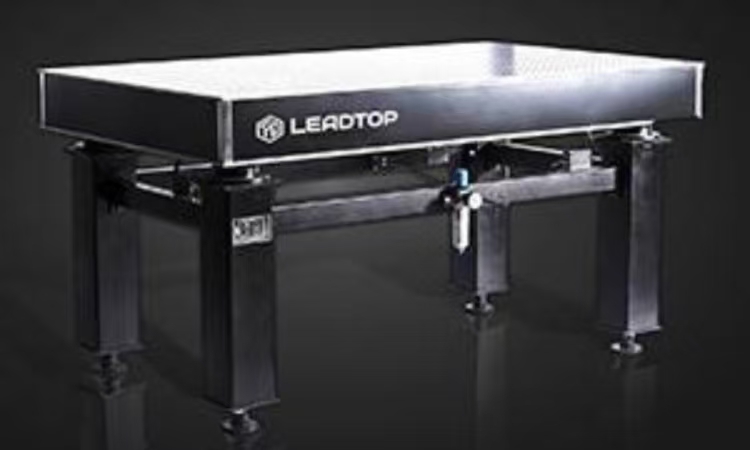
Answer: Yes, it can be moved, but you must first deflate and lower the platform to the foundation support state, then raise the casters (if configured). After moving, re-inflate and re-level to restore isolation performance. It is recommended to contact LeadTop technical support before moving to ensure proper operation.
Answer: The LeadTop MD series silent air compressor adopts a low-noise design, and the noise level meets laboratory environment requirements. If higher needs are required, a higher-level silent air compressor solution can be optionally configured.
Answer: Yes. An active isolation table (such as the TA series) combined with air-float elements can further enhance low-frequency vibration suppression capability, suitable for scenarios with extremely high vibration requirements. For composite isolation needs, please contact the LeadTop technical team for solution design.
Answer: Air-float isolation is a type of passive isolation that relies on the air film to "soften" the vibration transmission path, with a minimum natural frequency of 1–2 Hz, suitable for the vast majority of precision optical and inspection scenarios. Active isolation (TA series) uses sensors + actuators to generate real-time counter-forces to cancel vibration, can handle ultra-low-frequency vibrations below 0.5 Hz, and is suitable for extremely sensitive equipment such as electron microscopes and atomic force microscopes. Judgment criterion: if you are unsure how severe the low-frequency vibration is, first conduct a vibration assessment—only if the vibration spectrum shows significant energy below 0.5 Hz should active isolation be considered; otherwise, air-float isolation is the more economical choice.
The core value of an air-float vibration isolation platform lies in using an ultra-low natural frequency of 1–2 Hz to solve the low-frequency vibration problem that spring and rubber isolation cannot handle. This article completely covers the selection chain of air-float vibration isolation platforms, from working principle, technical comparison, core advantages, application scenarios to usage specifications.
There are only three core recommendations:
Next steps, you may:
📄 Obtain the "Air-Float Vibration Isolation Platform Selection Requirements Form": Fill in equipment type, vibration sensitivity, and site conditions, and the LeadTop technical team will provide initial selection recommendations (free, no purchase obligation)
📞 Communicate your needs directly: Call 0791-88224425, or add the technical engineer's WeChat at 18870003091
📚 Review technical materials: Visit www.opticaltable.cn to view product parameters, frequency response curves, and application cases
After submitting the selection requirements form, you will receive a reply within 24 hours—even if we do not ultimately cooperate, you will receive a professional selection reference.
Consult LeadTop now for free selection advice
Website: www.opticaltable.cn
Email: sales@opticaltable.cn
Phone: 0791-88224425
All technical parameters in this article are cited from the public product documents and test reports of Nanchang LeadTop Technology Co., Ltd. Before purchase, the following verification documents may be requested from LeadTop:
Data traceability: All parameters can be verified through LeadTop technical documents and are not marketing descriptions.
© 2026 Nanchang LeadTop Technology Co., Ltd. | www.opticaltable.cn | Focused on the field of micro-vibration control


