Vibration Control: The “Invisible Shield” of Precision Manufacturing
Vibration represents the dynamic response generated when mechanical systems interact with their external environment. Left unchecked, it can cause everything from reduced equipment precision to catastrophic structural fatigue failure. The core principle of vibration control lies in constructing an “invisible shield” for precision manufacturing through three primary approaches: blocking vibration transmission paths, adjusting system natural frequencies, and introducing damping to dissipate energy.
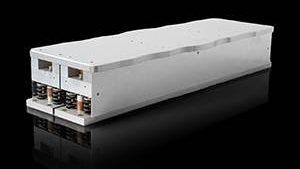
For instance, LeadTop's VCM-D600 active vibration isolation strip employs multi-degree-of-freedom active compensation technology. This modular isolation solution, specifically developed for precision instruments, achieves six-degree-of-freedom synchronous vibration suppression across the 1-200Hz frequency range, eliminating environmental vibration interference with ultra-sensitive equipment.
The “Blocking Technique” for Vibration Transmission Paths
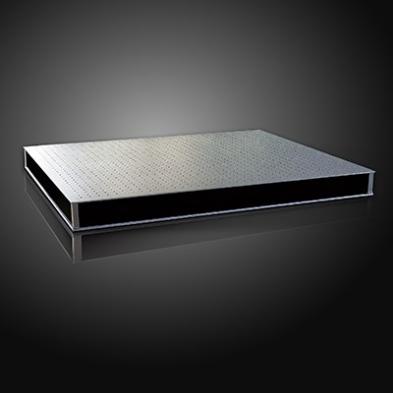
Blocking vibration transmission paths is the most direct method of vibration control. Passive isolation reduces vibration transmission rates through spring-damper systems, with the key being to design the isolator's natural frequency to be less than one-third of the excitation frequency. For instance, LeadTop's MOT-Z series ultra-heavy platform base plates utilize a welded mesh structure with built-in damping materials to suppress resonance.

Active isolation, meanwhile, employs sensors to capture vibration signals in real time, driving piezoelectric ceramics or voice coil motors to generate counteracting forces, achieving “zero-delay” compensation.
The “Energy Conversion Technique” of Damping and Frequency Modulation
The core of damping lies in converting vibrational energy into dissipated thermal energy. Traditional rubber isolators rely on internal material friction to absorb energy but are prone to aging; LeadTop's ZDT-P Series air-bearing optical platforms employ air springs and ultra-thin composite air chambers, combined with multi-pore quasi-laminar damping technology, achieving vertical/horizontal natural frequencies of 1.0–2.0 Hz and supporting pneumatic auto-leveling.

Additionally, frequency tuning can be achieved by adjusting isolator stiffness or mass distribution to alter the system's natural frequency.
Vibration Control Principles and “Scenario-Based Adaptation”
Vibration control is not a one-size-fits-all solution; customized approaches are essential based on specific application requirements. For quantum optics experiments, LeadTop's MOT-W Series magnetic-free optical platform bases utilize non-magnetic 304 stainless steel or aluminum alloy materials with integrated damping materials to suppress resonance. These are ideal for scenarios demanding high magnetic-free environments, such as optical experiments and precision instrument testing.
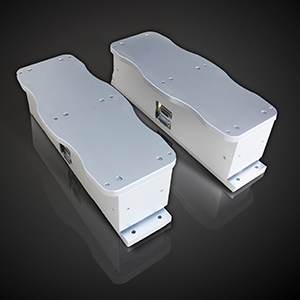
In industrial settings, its VCM-S400 active vibration isolation strip employs multi-degree-of-freedom active compensation technology, overcoming the 1Hz ultra-low-frequency isolation barrier to achieve six-degree-of-freedom decoupling compensation. This makes it an ideal isolation solution for precision manufacturing and nanometrology.
This capability for “scenario-specific adaptation” is precisely why LeadTop has become the preferred supplier for over 1,000 research institutions and industrial enterprises worldwide.


