The vibration isolation and damping devices is the core guarantee for the stable operation of precision instruments, which isolates vibration interference through active or passive technology to improve equipment measurement accuracy and reliability. This article will analyze the technical principles and application value of active vibration isolation and structural optimization from two main directions.
Active vibration isolation and damping devices: precise breakthrough in dynamic compensation
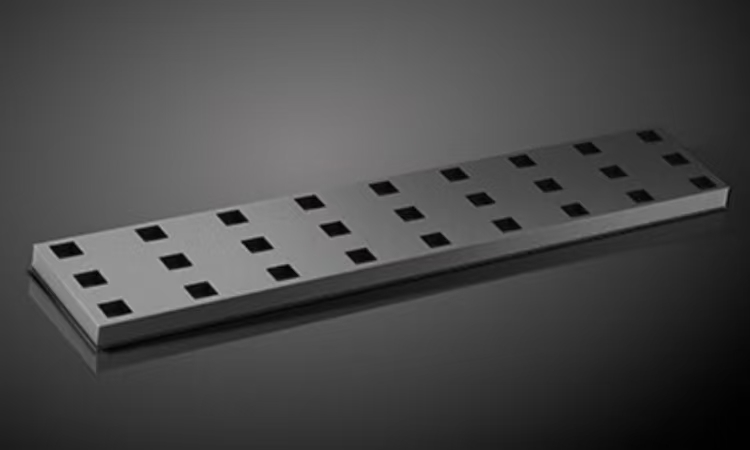
The active vibration isolation devices monitors the vibration signal in real time through sensors and drives the actuator to generate reverse compensation force. Taking LeadTop's VCM-S400 active isolation strip as an example, it adopts multi degree of freedom compensation technology to break through the 1Hz ultra-low frequency isolation limit, achieve six degree of freedom decoupling compensation, and automatically correct dynamic load fluctuations.
The isolation efficiency is greater than 95% @ 10Hz, significantly improving the scanning speed of the scanning probe microscope. The modular design of this product supports quick hot swappable replacement and redundant dual DSP control to ensure system reliability, making it an ideal choice in the field of nanometrology.

Passive vibration isolation and damping devices: the stable cornerstone of embedded platforms
Passive vibration isolation devicess rely on material and structural design to suppress vibration. LeadTop's MOT-Q embedded platform platform adopts a mesh welding structure, with built-in damping materials to suppress resonance. The medium carbon steel plate provides high mechanical strength and small load deformation.
The thickness of the stainless steel panel (1Cr13/304) is 8-20mm, with a metric M6 array of holes and a flatness of 0.05-0.1mm/m ², meeting the stringent stability requirements of precision testing scenarios.
The vibration isolation and damping devices provides a stable operating environment for precision instruments through active compensation and structural optimization dual paths. The LeadTop brand, with its VCM-S400 active isolation strip and MOT-Q embedded platform, covers multiple scenarios from nanometering to industrial testing, becoming a reliable partner for users to improve devices performance.


