Introduction: The Core Value of Vibration Reduction Technology
Vibration, as a common phenomenon in the operation of mechanical systems, can affect equipment accuracy at the very least and cause structural damage at the most severe level. Vibration reduction technology, by blocking vibration transmission paths or dissipating vibration energy, has become crucial for ensuring the stable operation of precision equipment. This article will analyze the core principles and application scenarios of vibration reduction methods from two major dimensions: passive vibration reduction and active vibration reduction.
Passive vibration reduction method: a classic solution with low cost and high efficiency
Passive vibration reduction methods rely on the inherent elasticity and damping characteristics of materials, eliminating the need for external energy input. Common methods include:
Rubber vibration isolation: It absorbs medium and high-frequency vibrations through shear deformation of the rubber layer, suitable for equipment such as fans and water pumps. For example, after adopting rubber vibration isolation pads, an electronics factory reduced the vibration amplitude of its equipment by 60%.
Spring vibration isolation: Metal springs exhibit significant isolation effects on low-frequency vibrations (2-6Hz) and are commonly used in the foundation of large power equipment.
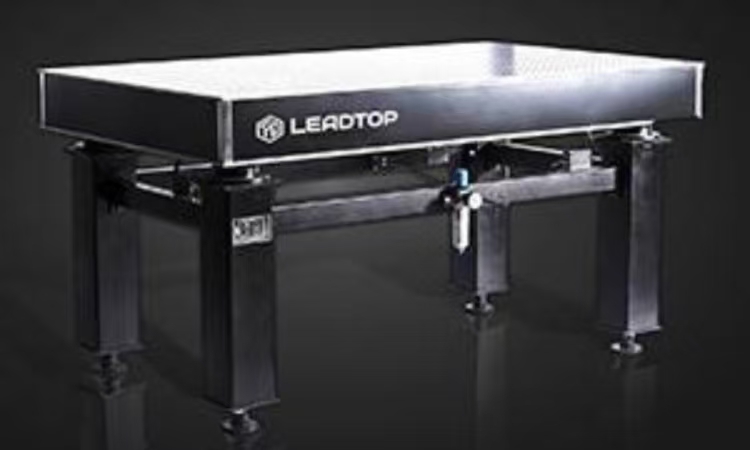
Air spring vibration isolation: Using high-pressure air as the elastic medium, variable stiffness is achieved by adjusting the air pressure. The LeadTop air-bearing vibration isolation optical platform ZDT-P series utilizes air springs, with a vertical natural frequency as low as 1.0Hz and a vibration isolation efficiency exceeding 95%, making it the preferred solution in the semiconductor manufacturing field.
Active vibration reduction method: intelligent high-precision control
Active vibration reduction methods monitor vibration signals in real-time through sensors and drive actuators to generate counteracting vibrations, achieving low-frequency or even ultra-low-frequency vibration isolation. Typical applications include:
Dynamic vibration absorber: A mass-spring-damping subsystem is added to the main system to consume energy through resonance.
Electromagnetic actuator: It utilizes electromagnetic force to directly counteract vibration, making it suitable for high-end fields such as aerospace and semiconductors.
Conclusion: Future Trends of Vibration Reduction Technology
From passive to active, vibration reduction technology is evolving towards intelligence and integration. Brands like LeadTop have lowered the barrier to entry for high-precision vibration isolation platforms through modular design and intelligent leveling functions. In the future, with breakthroughs in material science and control theory, vibration reduction technology will play a greater role in fields such as quantum computing and ultra-precision machining.


