As a core component for stable operation of precision equipment, the selection of vibration isolators requires comprehensive consideration of vibration frequency, load requirements, and usage scenarios. This article starts from technical principles and combines the characteristics of LeadTop brand products to analyze the adaptation scenarios of different types of vibration isolators, providing reliable support for high-precision equipment.
1、 High frequency vibration scenario: damping advantages of rubber vibration isolators
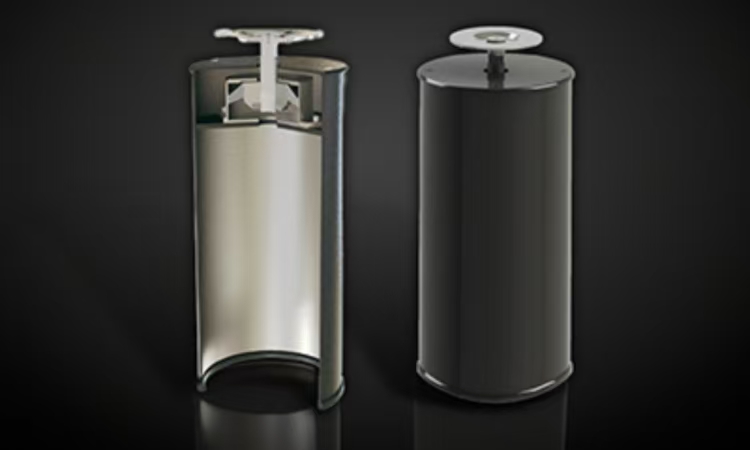
High frequency vibrations (above 10Hz) are common in optical manufacturing, electron microscopy, and other scenarios, and rubber isolators with high damping coefficients should be preferred. LeadTop's hollow cone rubber isolator POT-G series adopts a hollow cone structure and special rubber formula, with a natural frequency as low as 4-8Hz. Through a large damping design, the recovery period is shortened, effectively suppressing high-frequency vibration transmission.
Its load range covers 50-700kg and supports optional casters and precision adjustment systems. In scenarios such as microscope stages and optical detection equipment, it can reduce vibration interference by more than 80%.
2、 Ultra low frequency vibration scenario: the swing rod revolution of air floating vibration isolators
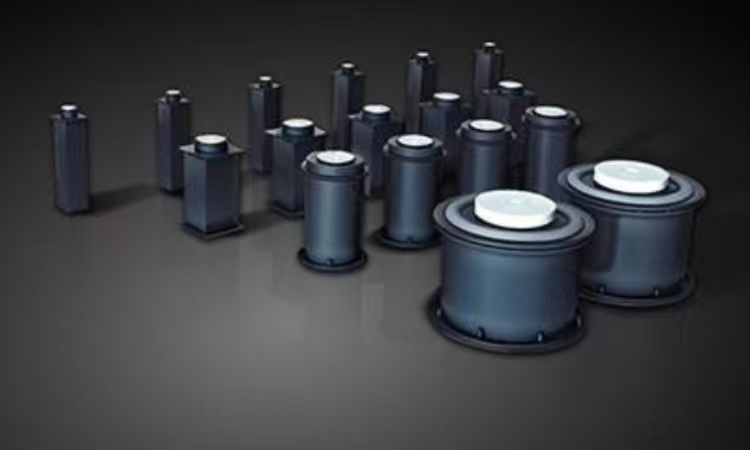
For scenarios such as laser interferometers and nanoscale processing equipment that require suppression of 0.5-5Hz ultra-low frequency vibrations, air flotation isolators have become the preferred choice. The ZDT-B series of LeadTop's swing rod air floating vibration isolator is optimized based on the single pendulum principle, with a horizontal natural frequency reduced to 1.0-1.5Hz and a vertical frequency of only 1.0-2.0Hz.
With an external damping regulator, it achieves a vertical/horizontal isolation efficiency of 86-92%/88-94% in the 5Hz frequency band. Its automatic leveling function and silent design make it a benchmark solution in fields such as quantum optics and semiconductor manufacturing.
3、 General Precision Scenario: The Balance Way of Air Float Vibration Isolator
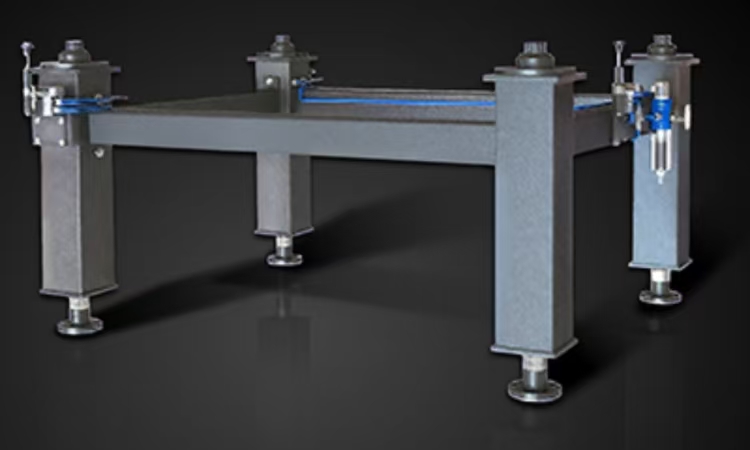
In general precision equipment such as microscopes and spectrometers, it is necessary to balance vibration isolation performance and cost-effectiveness. The ZDT-P series of LeadTop adopts ultra-thin composite airbags and high-precision pneumatic systems, and dynamically adjusts the vibration frequency through external dampers.
This series has a vertical natural frequency of 1.5-3Hz and a horizontal frequency of 2-4Hz. While maintaining a vibration isolation efficiency of over 85%, it supports caster installation and rapid deployment, making it a cost-effective choice for laboratory, production line, and other scenarios.
4、 Core logic for selecting vibration isolators: frequency matching and load redundancy
The selection of vibration isolators should follow two principles: firstly, the operating frequency of the equipment should be higher than three times the natural frequency of the isolator to avoid resonance; Secondly, the selected load should reserve more than 20% redundancy to ensure long-term stability. LeadTop products achieve parameter customization through modular design.
For example, the POT-G series can be stacked to enhance load-bearing capacity, while the ZDT series supports air pressure fine-tuning to adapt to different working conditions, providing a full lifecycle vibration management solution for precision equipment.
The selection of vibration isolators, from high-frequency rubber to ultra-low frequency air flotation, essentially involves the three-dimensional matching of vibration frequency, load requirements, and scene characteristics. LeadTop, with its POT-G, ZDT-B, and ZDT-P series, has built an isolation matrix covering the entire frequency range of 0.5-100Hz. Its products have passed ISO 9001 certification and CE safety standards, providing vibration control support to over 3000 laboratories worldwide.
When choosing a vibration isolator, it is recommended to prioritize testing the actual vibration spectrum of the equipment, and then combine it with the LeadTop product parameter table for precise selection to achieve maximum return on investment.


