In the fields of precision manufacturing, scientific research experiments, and high-end engineering, vibration control is the core proposition to ensure equipment performance and data accuracy. Vibration reduction measures construct a "vibration free barrier" for high-precision scenarios by blocking the transmission path of vibration or consuming vibration energy. This article analyzes the precise control logic of vibration reduction measures from four dimensions: technical classification, core principles, typical scenarios, and innovative solutions.
1、 Three major technical paths for vibration reduction measures
Vibration reduction measures can be divided into three categories according to their mechanisms of action: vibration source control reduces vibration energy by optimizing equipment structure; The transmission pathway control uses elastic elements or damping materials to absorb vibrations; Passive isolation of the vibrating object is achieved through devices such as air springs and active actuators to isolate vibration transmission.
Taking rail transit as an example, the floating slab track attenuates vibrations by 5-15dB through propagation control, while LeadTop's LVH-T15 active isolation platform combines electromagnetic actuators with air springs to achieve six degrees of freedom vibration suppression across the entire frequency range of 1-200Hz, making it the preferred solution for electron microscopy imaging scenes.

2、 The core principle of vibration reduction measures: from passive damping to active cancellation
Passive vibration reduction relies on material properties to achieve energy dissipation. For example, rubber isolators convert mechanical energy into thermal energy through molecular friction, but their natural frequency is difficult to be lower than 5Hz and they are easily affected by environmental temperature and humidity.
Active vibration reduction uses sensors to monitor vibration signals in real time, and after calculation by the controller, drives the actuator to generate reverse force, achieving millisecond level response.
LeadTop's TA800 desktop isolation platform adopts a composite technology of active damping matrix and passive isolation layer, with an isolation efficiency of over 90% in the 5Hz frequency band and 95% in the 10Hz frequency band, making it an ideal support platform for wafer inspection and femtosecond laser systems.

3、 Scenario based application of vibration reduction measures: from laboratory to industrial site
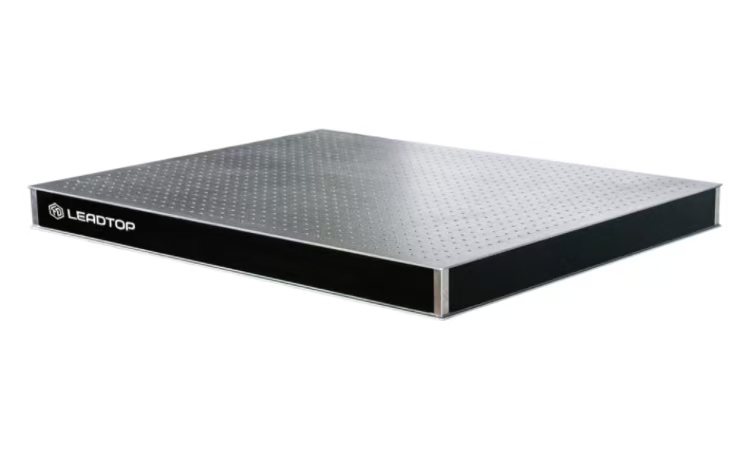
In the field of scientific research, optical platforms need to isolate micrometer level vibrations. LeadTop's MOT-F series honeycomb isolation optical platform uses a composite design of honeycomb core structure and damping layer to attenuate 1-10 Hz vibrations by more than 90%, while controlling temperature drift within 0.05mm/m ², meeting the sub nanometer stability requirements of laser interferometers.
In industrial scenarios, installing rubber shock absorbers on chemical pumps can reduce the risk of pipeline leakage, while large steam turbine generator units use a combination of spring shock absorbers and active vibration reduction systems to reduce vibration amplitude below the safety threshold.
4、 Innovative Trends in Vibration Reduction Measures: Empowered by Intelligent Materials and AI
Future vibration reduction measures will evolve in three directions: first, the development of intelligent materials that can automatically adjust damping, such as magnetorheological fluids and shape memory alloys; The second is to build an AI driven vibration prediction system and intervene in advance by training the model with historical data; The third is to promote environmentally friendly and sustainable design, using recyclable components to reduce lifecycle costs.
From passive absorption to active cancellation, from single frequency band to full frequency band coverage, vibration reduction measures are reshaping the boundary between high-end manufacturing and scientific research with precision control logic. With the integration of smart materials and AI technology, LeadTop's vibration reduction measures will be more precise and efficient in the future, providing solid guarantees for nanometer level precision requirements.


