In the field of building seismic protection, rubber isolation bearings serve as core devices safeguarding structural integrity by reducing seismic energy transfer through flexible isolation layers. Based on material composition and functional characteristics, rubber isolation bearings are primarily categorized into the following three types:
Standard Rubber Isolation Bearings: Foundation Support Type
Standard rubber bearings are manufactured through the alternating vulcanization of multiple rubber layers and thin steel plates. The steel plates provide vertical load-bearing capacity, while the rubber layers confer horizontal elastic deformation capability. They exhibit high vertical stiffness to bear building dead and live loads, while their low horizontal stiffness allows significant shear deformation during earthquakes to isolate horizontal seismic forces.
However, natural rubber has low damping (approximately 0.03-0.05), necessitating use with dampers. Commonly found in small-to-medium span bridges and low-rise buildings.
Lead-Core Rubber Isolators: Composite Energy-Dissipating Type
Lead-core rubber bearings incorporate a lead core within standard rubber bearings, leveraging lead's plastic deformation capacity to enhance damping. During earthquakes, the lead core dissipates energy through shear deformation while increasing the bearing's initial stiffness to prevent excessive displacement under wind loads or microseismic activity. With a damping ratio reaching 0.2–0.3, these bearings combine support and energy dissipation functions, making them widely used in high-rise buildings and critical infrastructure.
High-Damping Rubber Isolation Bearings: Material Innovation Type
High-damping rubber bearings significantly enhance material-intrinsic damping (damping ratio 0.1-0.15) by incorporating graphite or polymer additives into natural rubber. They operate independently without additional dampers, offer superior durability compared to lead-core bearings, and eliminate lead contamination risks.
For example, LeadTop's ZDT-J series variable-damping isolation feet utilize premium synthetic rubber and metal components. External adjustable dampers enable flexible damping settings, effectively reducing resonance risks. Anti-slip rubber pads on the base plate facilitate easy installation without requiring fixed positioning.
Its multi-layer composite rubber airbag enhances airtightness and fatigue resistance. The dual-chamber structure generates damping force through adjustable damping orifices, offering a variable damping ratio of 0.05-0.3. This makes it suitable for high-precision applications such as precision instruments and laser optics.
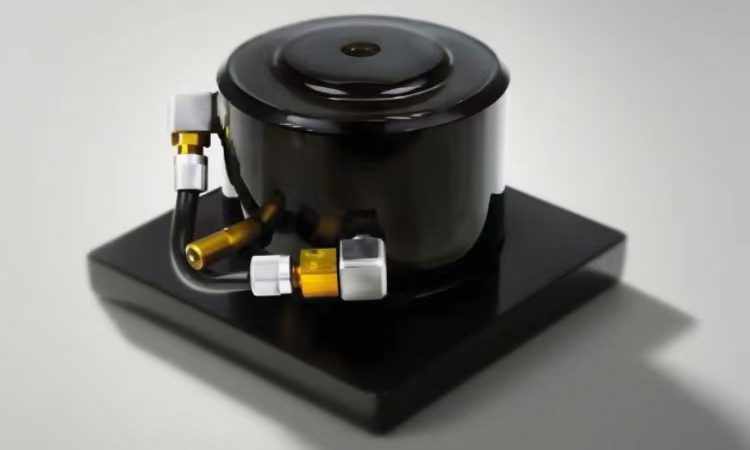
As a benchmark in precision vibration isolation, LeadTop also offers high-damping rubber isolation platforms. Utilizing nanoscale composite materials and a honeycomb core structure, these platforms achieve 95% vibration isolation in optical equipment and semiconductor manufacturing, ensuring micron-level machining precision.
Through material and structural innovation, rubber isolation mounts have evolved into a comprehensive system spanning basic support to intelligent energy dissipation. With the application of graphene-reinforced rubber and shape memory alloys, future isolation technology will advance toward greater efficiency and environmental sustainability.


