Vibration control is an enduring theme in precision engineering. Early vibration isolation relied on passive elements such as rubber pads and metal springs — simple and reliable, yet almost powerless against ultra-low-frequency ambient vibration in the 0–10 Hz range. As semiconductor processes shrink toward the nanometer scale and scientific instruments push toward sub-atomic precision, the active vibration isolation system has emerged. Rather than passively "absorbing" vibration, it actively "cancels" it. This article delves into the technical core of active vibration isolation systems and explores their extensive potential in next-generation high-tech scenarios.
The heart of an active vibration isolation system lies in its feedback control loop. Inertial sensors embedded within the system detect platform vibration acceleration with micrometer-level precision in real time. After signal conditioning and amplification, the data enters a controller for high-speed computation. Using algorithms such as PID, feedforward, or adaptive control, the controller calculates the current signal required to drive voice-coil actuators, which then generate opposing forces for active vibration suppression. The entire closed-loop cycle typically completes in under 10 milliseconds, endowing the active vibration isolation system with outstanding dynamic response capability.
Real-world vibration is never unidirectional — the ground simultaneously transmits translational motion along the X, Y, and Z axes, plus rotational motion about all three axes, totaling six degrees of freedom. A superior active vibration isolation system must perform independent sensing and control across all six, requiring a mechanical structure that achieves motion decoupling. LeadTop's LHV series addresses this challenge with an architecture where air springs handle vertical compliance and independent pendulum mechanisms process horizontal motion, successfully delivering precision active control in all six degrees of freedom while preventing cross-coupling. This decoupling capability is a key technical benchmark for evaluating the performance of any active vibration isolation system.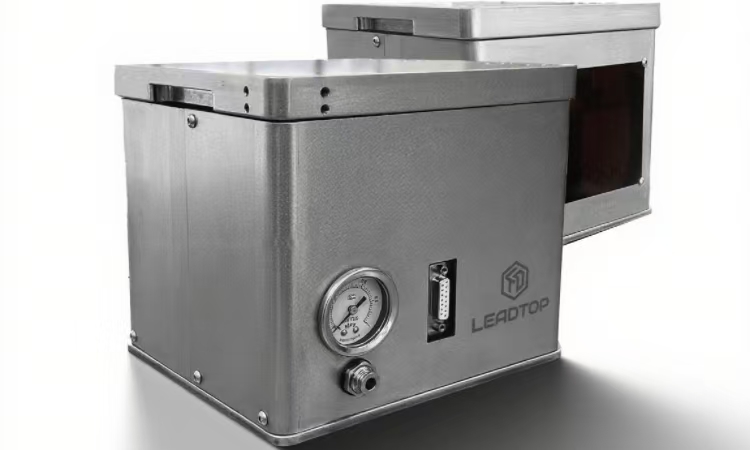
The vibration control requirements of chip manufacturing are among the most stringent in any industry. EUV lithography machines achieve resolution of just a few nanometers, and wafer inspection tools approach atomic-level precision — any minute ground vibration can leave fatal defects on silicon wafers. Consequently, virtually all cutting-edge semiconductor production lines are equipped with active vibration isolation systems to ensure lithography, etching, and inspection processes operate in an ultra-quiet environment. As a professional supplier of vibration-isolated optical tables and accessories, LeadTop provides comprehensive isolation solutions — from passive to active — serving semiconductor production lines with varying precision requirements.
In medical imaging, MRI gradient coils generate self-induced vibrations during switching, which can combine with external environmental vibrations to produce image artifacts and compromise diagnostic accuracy. After installing an active vibration isolation system, ultra-low-frequency vibrations are effectively blocked, yielding markedly improved image quality. Similarly, surgical robots, ophthalmic laser devices, and other precision medical instruments are increasingly adopting active vibration isolation systems as standard equipment to ensure surgical precision and patient safety.
From industrial-era spring damping to the information-age active vibration isolation system, vibration control technology has achieved a qualitative leap. With their unique advantages of real-time sensing, intelligent control, and broadband isolation, active vibration isolation systems are reshaping vibration protection standards in precision manufacturing and scientific research. As domestic production accelerates and costs continue to optimize, active vibration isolation systems will expand from high-end markets into broader industrial applications, forming a solid foundation for the high-quality development of manufacturing worldwide.


