As modern scientific research continues to advance, the demand for experimental environment stability is steadily increasing. From fundamental physics to biomedical science, from materials science to semiconductor inspection, optical table components have become standard equipment in major laboratories. Different disciplines impose varying requirements on optical table components—some emphasize isolation bandwidth, others prioritize tabletop flatness, while still others require cleanroom compatibility from their optical table components. This article explores the practical value and configuration strategies of optical table components across diverse research fields from an application-oriented perspective.
The quality of microscope imaging is profoundly affected by environmental vibrations. At magnifications of hundreds or even thousands of times, micron-level vibrations can cause image blurring or displacement. Optical table components provide a stable working surface for high-resolution microscopes by effectively isolating low-frequency vibrations conducted through the floor and acoustic vibrations transmitted through the air. Whether for bright-field, dark-field, or fluorescence microscopy imaging, the vibration isolation performance of optical table components directly determines image clarity and measurement accuracy. In long-duration time-lapse imaging experiments, the long-term stability of optical table components becomes particularly critical.
Precision optical experiments such as laser interferometry, holographic exposure, and optical tweezer manipulation impose the most stringent requirements on optical table components. In these experiments, optical path lengths may extend to several meters, and any sub-micron tabletop displacement can cause interference fringe drift or holographic pattern distortion. Optical table components must provide effective vibration isolation across a broad frequency band while ensuring minimal tabletop deformation over extended periods. When arranging optical paths on optical table components, the evenly spaced mounting threaded hole arrays on the tabletop should be rationally utilized to ensure that each optical element can be precisely positioned and flexibly adjusted.
Many processes in semiconductor manufacturing and inspection demand extremely high levels of vibration control. Wafer inspection, lithography alignment, and thin-film thickness measurement all require optical table components to provide a stable working foundation. The use of optical table components in cleanroom environments also requires special attention to the particle emission characteristics and chemical corrosion resistance of panel materials. Optical table components with high-permeability stainless steel face sheets demonstrate outstanding advantages in these scenarios—their surfaces are easy to clean, generate no additional particulate contamination, and exhibit excellent tolerance to cleaning solvents commonly used in cleanrooms.
In frontier research fields such as condensed matter physics, nanomaterials, and quantum optics, optical table components carry diverse precision instruments—including atomic force microscopes, scanning tunneling microscopes, and Raman spectrometers. These instruments are exceptionally sensitive to environmental vibrations and require optical table components to deliver extremely low background noise levels. Laboratory location is also an important factor influencing the effectiveness of optical table components; where conditions permit, optical table components should ideally be installed on the ground floor or basement of a building, leveraging the mass of the earth to reduce vibration transmission. Combined with high-performance isolators, optical table components can create the necessary working conditions for precision instruments in most environments.
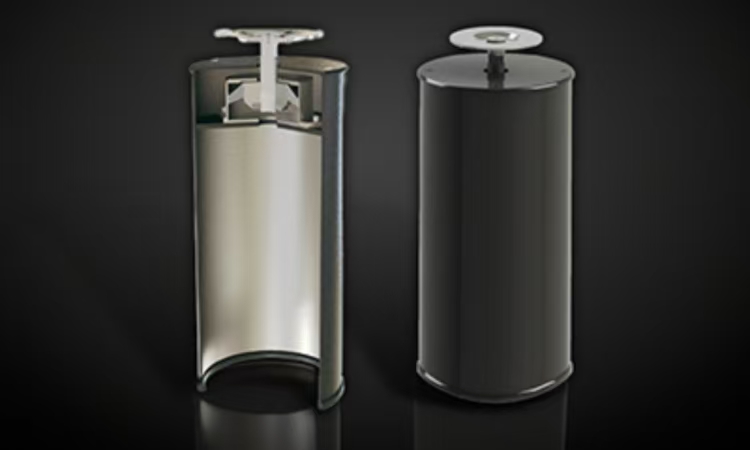
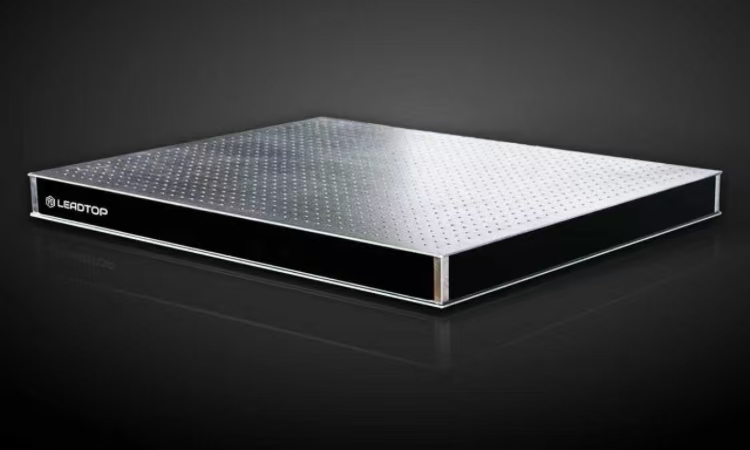
In practical applications, a single set of optical table components often proves insufficient to meet all the requirements of complex experiments, necessitating systematic configuration and customization. LeadTop offers users flexible optical table components combination solutions—for example, its POT-G series hollow conical rubber isolators can be freely paired with MOT series optical panels of different specifications. The POT-G isolators employ high-tech rubber materials with specialized structural design, effectively isolating medium- and high-frequency vibrations, with high damping, short recovery cycles, natural frequencies of 4–8 Hz, and a load coverage range of 50–700 kg. The accompanying MOT series optical panels are available in multiple size specifications to accommodate diverse laboratory spatial and experimental layout requirements. This modular design philosophy for optical table components allows users to flexibly configure their setup according to actual experimental needs without incurring additional costs for redundant features.
The installation and commissioning of optical table components are critical steps in ensuring ultimate performance. Although a set of optical table components undergoes precision calibration before leaving the factory, minor changes during transportation and installation may still affect performance. When installing optical table components, the ground should first be confirmed as level and solid, with leveling assisted by a spirit level. After installation, acceptance testing should be conducted on all performance indicators of the optical table components, including flatness re-measurement, natural frequency testing, and load deformation testing. A complete acceptance file should be established, recording the initial state data of the optical table components to provide a baseline reference for subsequent maintenance and performance comparison. Only after confirming through rigorous acceptance procedures that all indicators of the optical table components meet specifications can they be formally put into experimental use.
As the fundamental infrastructure for precision scientific research, optical table components play an irreplaceable role across diverse disciplines. From microscopy imaging to laser interferometry, from semiconductor inspection to nanomaterials research, optical table components consistently serve as the solid backbone safeguarding experimental precision. Rational selection and targeted optimization of optical table components according to application scenarios can significantly enhance experimental efficiency and data quality. Understanding the application characteristics of optical table components across various fields is core knowledge that every laboratory builder and manager needs to master.


