Introduction: Three decision criteria and a four-step framework to select the right isolation technology for your research needs.
The choice between active and passive vibration isolation is one of the most consequential decisions in laboratory infrastructure planning. Get it right, and years of research proceed smoothly. Get it wrong, and expensive instruments underperform or become unusable.
This guide provides a clear technical comparison and a practical decision framework to help researchers make informed choices.
Passive isolation uses elastic elements—springs, air springs, or rubber—to absorb and dissipate vibration energy. Once installed, passive systems require no external power or control systems.
Limitations: Passive systems can only attenuate vibrations at frequencies above their natural frequency. For typical air spring systems with 1-2Hz natural frequency, vibrations below 2Hz pass through largely unchanged.
Active isolation systems use sensors to detect incoming vibrations, digital controllers to calculate counter-forces, and actuators to generate real-time compensation. This feedback loop enables effective isolation at frequencies where passive systems fail.
Key capability: Active systems can achieve isolation starting from 0.5Hz, effectively addressing building sway that passive systems cannot touch.
|
Parameter |
Passive Isolation |
Active Isolation |
|
Frequency Range |
Above natural frequency only |
0.5Hz to 200Hz+ |
|
Low-Freq Performance |
Minimal below 5Hz |
Effective at 0.5Hz |
|
Response Speed |
No active response |
Milliseconds |
|
Power Required |
None |
Continuous (typically <100W) |
|
Maintenance |
Minimal |
Low (modern systems) |
|
Price Range |
$1,000-$30,000 |
$5,000-$300,000+ |
Before choosing technology, measure your actual vibration environment:
|
Vibration Profile |
Recommended Technology |
|
Dominant above 10Hz only |
Passive air spring sufficient |
|
Contains <5Hz components |
Active isolation required |
|
Variable/disturbances frequent |
Active with fast response |
|
Precision Level |
Example Applications |
Recommended |
|
Micron-level |
Standard microscopy, basic optics |
Passive sufficient |
|
Sub-micron level |
Laser scanning, confocal microscopy |
Quality passive or entry-level active |
|
Nanometer level |
AFM, advanced interferometry |
Active isolation required |
|
Sub-nanometer level |
TEM/SEM, quantum research |
High-performance active |
Beyond technical requirements, consider:
Initial purchase price is only part of the equation:
Passive isolation makes sense when:
Quality air spring isolation tables (natural frequency 1-2Hz) can achieve 95%+ isolation efficiency above 10Hz at a fraction of active system costs.
Active isolation becomes necessary when:
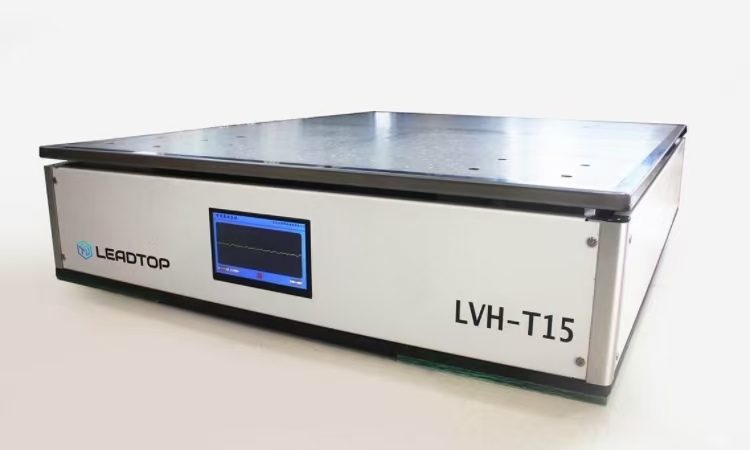
The LeadTop LVH-T15 Heavy-Duty Active Vibration Platform exemplifies modern active isolation technology: 0.5-200Hz bandwidth, electromagnetic actuators with ≤30ms response, composite air spring with ≤1.5Hz natural frequency.
Q: Can passive isolation damage sensitive instruments?
A: No. Passive isolation only reduces transmitted vibrations—it cannot amplify them. The worst case is insufficient isolation, not damage.
Q: Do active systems require special power supply?
A: Most active isolation systems operate on standard 110/220V power. Power consumption is typically under 100W. Some high-performance systems may require dedicated circuits.
Q: What happens if the active system loses power?
A: Active systems include passive isolation components as a fail-safe. In power loss, isolation degrades to passive levels rather than failing completely.
Q: How long do active isolation systems last?
A: Modern active isolation systems are designed for 10+ year lifespan with minimal maintenance. Actuators and sensors may require periodic calibration or replacement after 5-7 years.
Q: Can I upgrade from passive to active later?
A: Some systems offer modular designs that allow adding active components to passive bases. However, this is typically more expensive than initial active installation.
The active vs. passive decision ultimately rests on understanding your vibration environment and application requirements. Use the four-step framework—characterize vibrations, match to sensitivity, evaluate constraints, consider total cost—to make an informed choice.
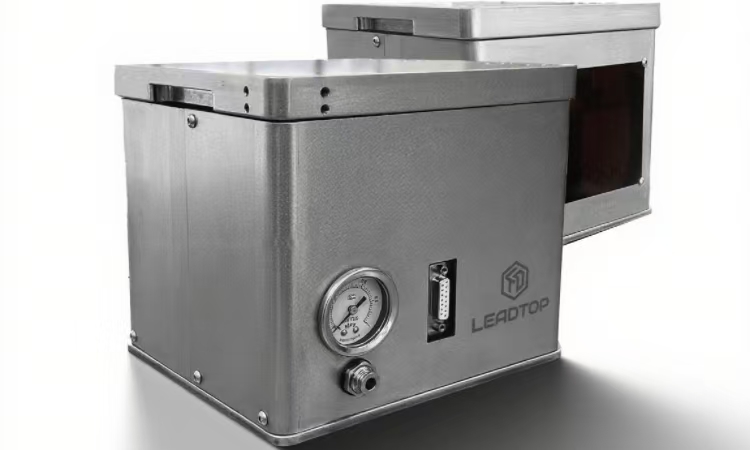
When building sway and nanoscale precision are both requirements, active isolation is the clear choice. The LeadTop LVH-T15 and LHV Series provide comprehensive specifications for demanding applications: 0.5-200Hz bandwidth, fast response, 6-DOF control, and proven reliability for SEM/TEM installations.
References:


