Modern precision instruments impose increasingly stringent requirements on their working environments. As a core indicator of environmental stability, vibration control directly affects the measurement accuracy and operational lifespan of equipment. A deep understanding of the technical principles behind active vs passive vibration isolation is fundamental knowledge for every engineer working with precision instrumentation.
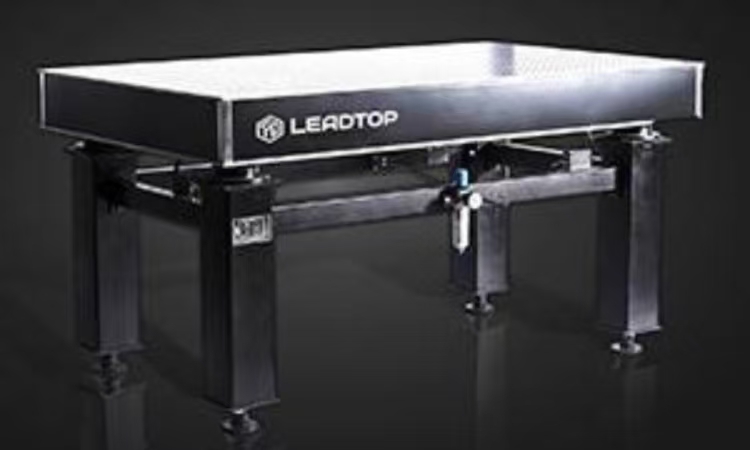
Passive vibration isolation operates by leveraging the stiffness of elastic elements and the inertia of mass components to attenuate vibrations along their transmission path. The key parameter is the system natural frequency — the lower the natural frequency, the better the isolation performance against external vibrations. Traditional passive systems typically have natural frequencies of 3~5Hz, making it difficult to effectively suppress building-structure vibrations below 1Hz. The LeadTop ZDT-P Series Air-Floating Optical Table achieves natural frequencies of just 1.0~2.0Hz by combining air springs with multi-hole quasi-laminar damping technology, reaching 95% isolation efficiency within the passive framework. This represents a significant performance breakthrough, providing a solid and stable mounting foundation for precision optical and measurement equipment.
Active vibration isolation introduces closed-loop control, with its core composed of vibration sensors, a controller, and actuators. Sensors capture vibration signals in real time, the controller rapidly calculates the optimal compensation strategy using advanced algorithms, and actuators output counteracting forces to achieve cancellation. The LeadTop LVH-T15 Heavy-Duty Active Vibration Isolation Platform employs electromagnetic actuators combined with a four-stage air spring system. This hybrid approach provides not only the baseline performance of passive isolation but also breaks through the low-frequency bottleneck of traditional passive systems through six-degree-of-freedom active compensation. The result is comprehensive vibration suppression from 0.5 to 200Hz, with particularly notable effectiveness against building sway in the 0.5~5Hz range. Purpose-designed for TEM and SEM applications, the LVH-T15 is a benchmark product in the heavy-duty precision equipment vibration isolation field.

From the perspective of natural frequency, passive systems can reach approximately 1Hz, while LeadTop active platforms reduce the equivalent natural frequency to below 0.5Hz through active control. Regarding isolation bandwidth, passive isolation primarily covers frequencies above 5Hz, while active isolation covers the full spectrum from 0.5 to 200Hz. For load capacity, passive platforms adapt well to varying loads, whereas active platforms like the LVH-T15 are specifically engineered for heavy-duty applications with outstanding load-bearing capability. On energy consumption and maintenance, passive isolation requires no external power, while active systems need continuous power supply but still maintain manageable maintenance requirements.
In engineering practice, the active vs passive vibration isolation decision is not binary. Hybrid Vibration Isolation combines the strengths of both technologies: the passive layer handles baseline vibration attenuation while the active layer compensates for ultra-low-frequency disturbances. This approach has become the mainstream trend in the precision instrumentation field. LeadTop possesses both the R&D and manufacturing capabilities for the ZDT-P Series air-floating passive platform and the LVH-T15 Series active platform, enabling flexible product combinations that effectively cover the full spectrum of vibration isolation needs — from precision optics to heavy-duty electron microscopy.
Whether referring to active vibration isolation or passive vibration isolation, the ultimate goal is to create a stable and reliable working environment for precision equipment. By systematically understanding the principles, advantages, and limitations of both technologies, and making scientific selections based on specific application scenarios, the true value of vibration isolation technology can be fully realized. Choosing a supplier like LeadTop — with a complete product portfolio and professional service capabilities — provides strong assurance for the successful implementation of any precision instrumentation project.


