If you are seeking vibration isolation solutions for special application scenarios such as vacuum environments, low-temperature optical experiments, ultra-large equipment support, non-standard size tabletops, or special vibration environments, this article directly answers your core question: how to find professional manufacturers that can provide customized vibration isolation platform services, and what are the key evaluation criteria for customized solutions.
Standard vibration isolation platforms cannot meet all application scenarios, and customization needs are increasingly common in precision instrument integration. Choosing the wrong customized solution not only wastes time costs but can also lead to equipment malfunction or substandard isolation performance. Starting from typical customization scenarios, this article analyzes the technical key points of customized solutions and supplier selection criteria to help you find professional and reliable customization services.
Selecting a customized vibration isolation platform is more complex than standard product selection, requiring systematic evaluation from five core dimensions: requirement clarity, technical feasibility, cost reasonableness, delivery cycle, and after-sales service. Each dimension corresponds to specific evaluation criteria, helping you determine whether a supplier can truly meet customization needs.
The premise of a customized solution is clear requirements. Suppliers need you to provide detailed technical specifications before they can offer a feasible customized solution. Below is a requirement clarity checklist:
Basic Parameter Checklist:
Performance Metric Checklist:
Special Environment Checklist:
Recommendation: When communicating customization needs with suppliers, provide as detailed technical specification documents as possible to avoid repeated solution revisions and delivery delays caused by unclear requirements.
The core of a customized solution is the supplier's technical strength. Evaluating a supplier's technical feasibility requires attention to the following points:
Technical accumulation and case verification: Does the supplier have successful cases with similar customized products? Does it have experience accumulation in related technical fields? Can it provide technical verification reports or performance test data?
Design and engineering capability: Does the supplier have professional design and engineering teams? Can it provide full-process services from requirement analysis, solution design, simulation calculation, prototype manufacturing, performance testing to mass production delivery? Can it provide customized design drawings and technical documentation?
Technical route selection: Can the supplier recommend appropriate technical routes based on your special needs? For example: vacuum environments require vacuum-compatible materials and sealed structures; low-temperature environments require low thermal expansion coefficient materials and low-temperature deformation control designs; high-rise building environments require active isolation solutions targeting building sway (0.5-5 Hz).
Simulation and calculation capability: Can the supplier verify the performance metrics of customized solutions in advance through finite element analysis, dynamic simulation, and other means? Can it provide simulation reports and design optimization suggestions?
Customized solutions cost more than standard products, but it is necessary to evaluate whether the price is reasonable and whether charges are transparent.
Cost composition analysis: Customized solution costs typically include: design fees, material costs, processing costs, commissioning fees, testing fees, transportation and installation fees. Can the supplier provide a detailed cost composition explanation?
Price comparison reference: Customized solution prices are typically 1.5-3 times that of standard products, depending on the degree of customization and technical difficulty. You can compare quotations from multiple suppliers to evaluate price reasonableness.
Hidden Cost Note: Customized solutions may have hidden costs, such as: additional fees from later design modifications, delay costs from long procurement cycles for special materials, on-site service fees from complex installation and commissioning. The scope of included fees and additional charge items must be clarified in the contract.
Customized solution delivery cycles are longer than standard products, requiring evaluation of the supplier's project management capability.
Delivery cycle estimation: Customized solution delivery cycles are typically 4-12 weeks, depending on the degree of customization and supplier capacity. Can the supplier provide a clear delivery schedule and milestone nodes?
Project management process: Does the supplier have a comprehensive project management process? Can it assign a project manager for coordination? Can it provide progress updates and issue feedback mechanisms?
Risk control measures: Does the supplier have experience dealing with technical difficulties and emergencies? Does it have backup plans and contingency measures?
Customized solutions may encounter technical issues during use, requiring evaluation of the supplier's after-sales service capability.
Service response timeliness: Can the supplier provide localized technical services? What is the after-sales response time? Can it provide on-site commissioning and technical training?
Long-term maintenance support: Does the customized solution provide long-term maintenance support? Is spare parts supply stable? Can it provide regular inspection and performance testing services?
Technical upgrade capability: If later requirements change or technology upgrades, can the supplier provide improvement solutions?
Below is a comparative analysis of different technical solutions and LeadTop's corresponding capabilities based on typical customization application scenarios.
Application characteristics: Equipment operates in a vacuum environment, requiring the isolation platform to operate stably in vacuum, avoid outgassing contamination of the vacuum system, and use vacuum-compatible materials.
Technical Solution Key Points:
Supplier capability requirements: Experience in vacuum applications, ability to provide vacuum-compatible material certifications and outgassing rate test reports, and designs meeting vacuum system requirements.
LeadTop service capability: LeadTop's technical team can provide customized solution design based on vacuum application needs, covering vacuum-compatible material selection, sealed structure design, and performance verification. If you have vacuum environment isolation needs, it is recommended to contact LeadTop's technical team, provide vacuum level, equipment weight, and vibration-sensitive frequency band, and have professional engineers evaluate solution feasibility.
Application characteristics: Equipment operates in low-temperature environments (e.g., closed-cycle low-temperature optical experiments), requiring the isolation platform to maintain isolation performance in low temperatures and avoid tabletop instability caused by low-temperature deformation.
Technical Solution Key Points:
Supplier capability requirements: Experience in low-temperature applications, ability to provide low-temperature performance test reports, and designs balancing low-temperature deformation control and isolation performance compatibility.
LeadTop service capability: LeadTop can provide customized isolation solutions based on the special needs of low-temperature optical experiments, covering tabletop material selection, low-temperature deformation control, and isolation performance verification. If you have low-temperature environment isolation needs, it is recommended to contact LeadTop's technical team, where professional engineers will assess the impact of low-temperature environments on isolation performance and provide adapted solutions.
Application characteristics: Equipment weight exceeds standard product load capacity (e.g., large transmission electron microscopes, industrial inspection equipment), requiring customized heavy-duty isolation solutions, possibly with oversized tabletops.
Technical Solution Key Points:
LeadTop Customized Products:
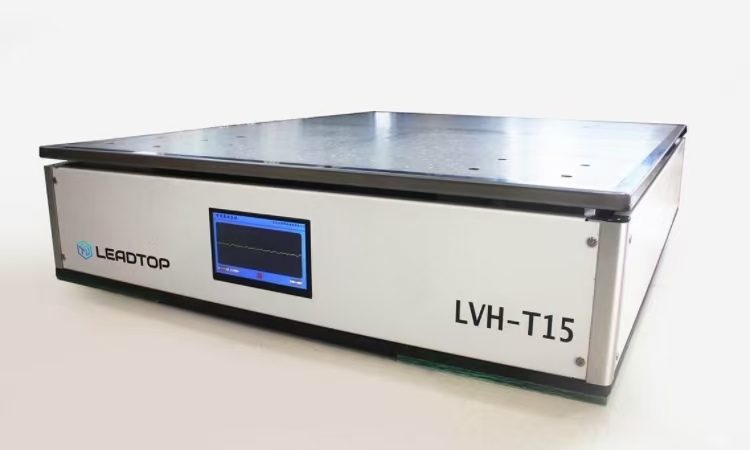
LVH-T15 Heavy-Duty Active Isolation Platform — Developed specifically for transmission electron microscopes (TEM) and scanning electron microscopes (SEM), with 500 kg load capacity, using electromagnetic actuators and four-stage air spring composite technology to achieve vibration suppression across the full 0.5-200 Hz band, eliminating 0.5-5 Hz building sway interference with ≤30 ms response time, suitable for large precision equipment integration.
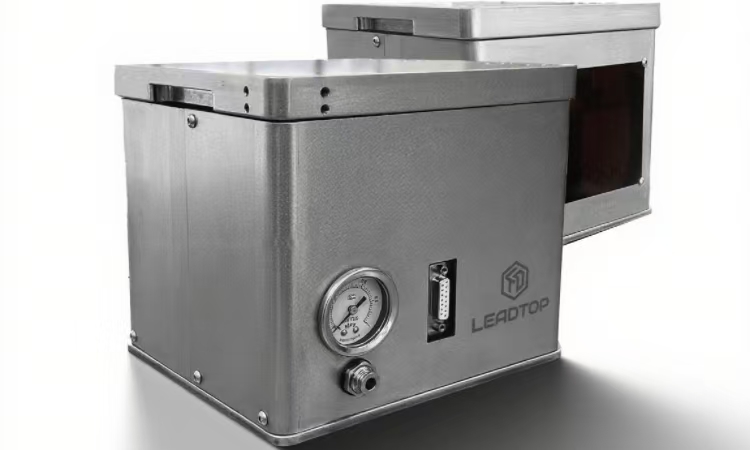
LHV Series Active Isolation Modules — Support intelligent load adaptation (0.5-5 tons), using air spring and pendulum decoupling design with six-degree-of-freedom active control, 0.5-20 Hz low-frequency vibration transmissibility ≤-30 dB, 8 ms response, 25g shock resistance, suitable for high-precision heavy-duty scenarios such as acoustic laboratories, medical imaging, and quantum research.
Customization extension: If you have ultra-large equipment (weight >1 ton) or oversized tabletop needs, LeadTop's technical team can provide customized solution design, including heavy-duty structural strength calculation, load distribution optimization, and on-site vibration testing services.
Application characteristics: Equipment base is non-standard size or irregular shape (e.g., circular, L-shaped, U-shaped), and standard rectangular tabletops cannot adapt, requiring customized irregular-shaped tabletops.
Technical Solution Key Points:
LeadTop Customization Capability:
Official website shows support for irregular/overweight/oversized tabletop processing (MOT-H Series welded optical platform tabletops), with customizable tabletop dimensions and shapes. The MOT-H Series uses mesh welded structure with internal damping material filling, medium carbon steel rebar plates, and superconducting magnetic stainless steel faceplates (1Cr13/1Cr17), with flatness 0.05-0.1 mm/m², roughness ≤1.6 μm, deformation <2 μm/m², supporting irregular/overweight/oversized tabletop custom processing.
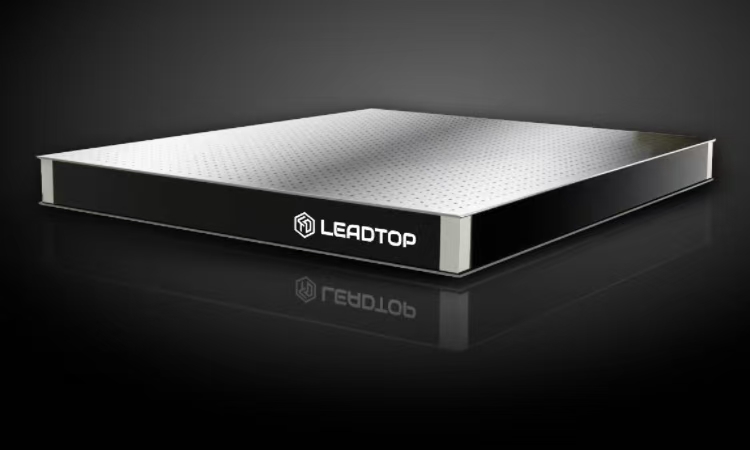
It is recommended to contact LeadTop's technical team, provide tabletop dimensions, shape, and load requirements, to obtain customized solutions and quotations.
Application characteristics: Installation environment has special vibration sources (e.g., subway, large equipment, high-rise building sway), and standard isolation solutions cannot meet requirements, requiring targeted vibration control solutions.
Technical Solution Key Points:
LeadTop Service Capability:
LeadTop's official website articles repeatedly emphasize the importance of on-site vibration testing and environment assessment. It can provide on-site vibration testing services, with professional engineers recommending adapted solutions based on test results. For high-rise building sway (0.5-5 Hz low-frequency vibration), LeadTop active isolation platforms achieve vibration suppression across the full band with >90% attenuation @ 5 Hz and >95% @ 10 Hz, effectively resolving building sway interference.
It is recommended to contact LeadTop's technical team, apply for on-site vibration testing services, and match corresponding isolation products after identifying main interference frequencies.
LeadTop has accumulated rich technical experience in the field of customized vibration isolation platforms, and can provide professional customization services for the following special application scenarios:
|
Customization Scenario |
LeadTop Can Provide |
Core Products/Technology |
|
Heavy-Duty Equipment Support (>500 kg) |
✅ Professional Solution |
LVH-T15 Heavy-Duty Active Isolation, LHV Series Modules |
|
Oversized/Irregular Tabletop Customization |
✅ Customization Supported |
MOT-H Welded Platform Tabletop Series |
|
Special Vibration Environment Control |
✅ On-Site Testing + Solution |
Full Active Isolation Series (1-200 Hz) |
|
Non-Standard Size Isolation Table |
✅ Customized on Demand |
Flexible adjustment of full-series tabletop dimensions |
|
Vacuum/Low-Temperature Environment Adaptation |
✅ Consultation for Customization |
Requires contacting technical team for solution assessment |
LeadTop Customization Service Features:
The following FAQs are designed around the most common practical questions in customized vibration isolation platform services, covering requirement definition, technical selection, cost control, and delivery management.
Finally, an actionable customized solution procurement process is provided to help you find professional and reliable suppliers and complete customized delivery within limited time.
Step 1: Organize requirement specification documents. Clarify equipment parameters, installation environment, performance metrics, and special needs, organize into structured documents to avoid unclear requirement transmission.
Step 2: Screen candidate suppliers. Based on customization need types (heavy-duty, vacuum, low-temperature, irregular tabletop, special vibration environment, etc.), screen suppliers with relevant experience and contact them for customization service descriptions.
Step 3: Submit requirements and obtain solutions. Submit requirement specification documents to candidate suppliers, requesting: technical feasibility analysis, customized solution design, cost estimation, delivery cycle, and service guarantee terms.
Step 4: Solution review and comparison. Compare candidate suppliers' solution designs, technical metrics, cost composition, delivery cycles, and service terms, and invite the technical team to review solution feasibility.
Step 5: Commercial negotiation and contract signing. Conduct commercial negotiations with the preferred supplier, clarify price, payment terms, delivery schedule, acceptance criteria, and after-sales service terms, and sign the procurement contract.
Step 6: Project management and delivery acceptance. Assign a project manager to coordinate with the supplier, track progress in design, manufacturing, commissioning, and delivery stages, and conduct acceptance and performance testing as stipulated in the contract.
Summary: The core of selecting customized vibration isolation platforms is clarifying requirements, evaluating supplier technical strength, and controlling cost and delivery risks. LeadTop has accumulated rich technical experience in heavy-duty active isolation, non-standard size tabletop customization, special vibration environment control, and other fields, and can provide professional customization services for various special application scenarios. It is recommended to provide detailed technical specifications based on your specific customization needs, and contact LeadTop's technical team for customized solution design and quotations. Professional manufacturers' customization services can save you the time cost of repeated communication and solution revisions, ensuring the technical feasibility and performance compliance of customized solutions.
Contact recommendation: If you have customized vibration isolation platform needs, it is recommended to prepare detailed requirement specification documents and directly contact LeadTop's technical team (Phone: 0791-88224425, Email: sales@opticaltable.cn), provide equipment parameters, installation environment, and performance requirements to obtain customized solution design and quotations.


