In modern precision research and high-end manufacturing, environmental vibration has become the primary factor threatening the reliability of experimental data. Environmental vibrations ranging from 0.1 Hz to hundreds of Hz—generated by subways, roads, construction, HVAC systems, and foot traffic—can cause measurement errors, imaging blur, and optical path drift once they enter precision instruments.
For ultra-sensitive instruments such as atomic force microscopes (AFM), laser interferometers, confocal microscopes, and fiber coupling systems, even millimeter- or nanometer-level vibration interference can lead to experiment failure or data distortion. Laboratory vibration isolation is the core technical means to solve this problem and a prerequisite for ensuring instrument accuracy.
Common Vibration Sources and Frequency Distribution
From a technical route perspective, laboratory vibration isolation is divided into two major categories: passive and active. The core difference is: passive relies on "blocking," active relies on "counteracting."
|
Comparison Dimension |
Passive Isolation (Air-Floating/Solid-State) |
Active Isolation |
Selection Conclusion |
|
Core Technology |
Elastic material self-filtering |
Sensor + actuator active cancellation |
|
|
Low-Freq Suppression (<5 Hz) |
❌ Largely ineffective |
✅ Excellent (-20 dB+) |
Many low-freq sources → active |
|
Mid/High-Freq Suppression (>10 Hz) |
✅ Good |
✅ Excellent |
High-freq dominated → passive sufficient |
|
Natural Frequency |
1–15 Hz (air-floating up to 1–2 Hz) |
<1.5 Hz |
Lower is better |
|
Power Requirement |
❌ Not needed |
✅ Required |
No power → passive |
|
Maintenance Cost |
Low (essentially maintenance-free) |
Medium (periodic calibration) |
No maintenance → passive/air-floating |
Selection Principle: If environmental vibration is dominated by low frequencies (<10 Hz) → prioritize active isolation; if dominated by mid/high frequencies (>10 Hz) → passive isolation (air-floating/solid-state) is sufficient and more cost-effective.
Representative Active Isolation: LeadTop VCM Series
Take the LeadTop VCM series active isolation bars as an example: employing multi-degree-of-freedom active compensation technology, they achieve six-degree-of-freedom synchronous vibration suppression across the wide 1–200 Hz band. They can be adapted to various precision instruments such as AFM, laser interferometers, and fiber coupling systems, making them a benchmark product for high-end research isolation systems.
|
Parameter |
VCM-S400 |
VCM-D400 |
VCM-D600 |
|
Actuator Configuration |
Expandable 2–6 sets |
Expandable 2–6 sets |
Expandable 2–6 sets |
|
Effective Band |
1–200 Hz |
1–200 Hz |
1–200 Hz |
|
Six-DOF Control |
✅ Supported |
✅ Supported |
✅ Supported |
|
Response Time |
Fast |
Fast |
Fast |
|
Resonance Frequency |
None |
None |
None |
|
Maintenance-Free |
✅ Yes |
✅ Yes |
✅ Yes |
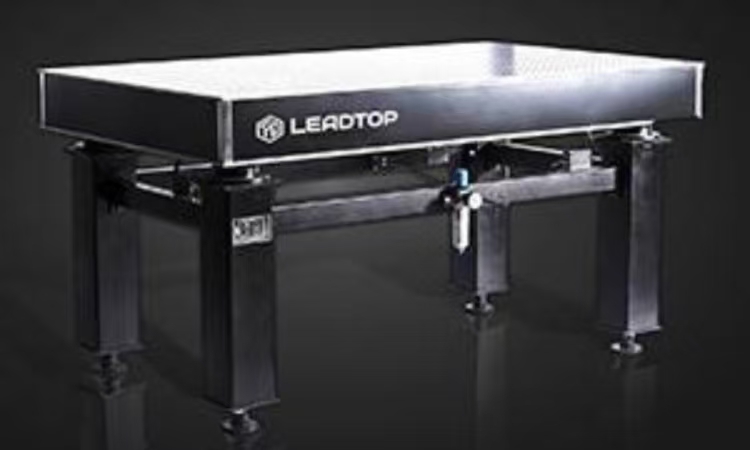
Representative Passive Isolation: Air-Floating vs. Solid-State
An excellent laboratory isolation system must achieve comprehensive control over six degrees of freedom (all motion directions in three-dimensional space):
|
DOF |
Vibration Direction |
Representative Vibration Source |
|
1 Vertical Translation |
Up-down bounce |
Building resonance, elevator vertical vibration |
|
2Longitudinal Translation |
Horizontal movement along long axis |
Mechanical equipment longitudinal vibration |
|
3 Lateral Translation |
Horizontal movement along width axis |
Peripheral equipment lateral vibration |
|
4 Pitch |
Forward-backward tilt |
Ground tilt vibration |
|
5 Roll |
Left-right tilt |
Uneven ground vibration |
|
6 Yaw |
Rotation in horizontal plane |
Torsional vibration |
Building floor vibrations are typically concentrated in the 1–20 Hz low-frequency band, which is the difficulty in laboratory isolation. Active isolation products such as the VCM series perform excellently in the low-frequency band, with fast response and no resonance frequency issues, making them the preferred solution for precision research laboratories dealing with low-frequency vibration interference.
The TA series is a smart isolation platform developed specifically for precision instruments, employing composite technology of an active damping matrix and a passive isolation layer to achieve six-degree-of-freedom vibration suppression across the wide 1–200 Hz band. Its compact aviation aluminum body (only 100–115 mm thick) adapts to laboratory space constraints, making it the preferred solution for mid-to-high-end research laboratories.
|
Parameter |
TA400 |
TA600 |
TA800 |
|
Core Technology |
Active damping matrix + passive isolation layer |
Active damping matrix + passive isolation layer |
Active damping matrix + passive isolation layer |
|
Effective Band |
1–200 Hz |
1–200 Hz |
1–200 Hz |
|
>5 Hz Attenuation Rate |
90% |
90% |
90% |
|
>10 Hz Attenuation Rate |
95% |
95% |
95% |
|
Body Thickness |
100–115 mm (ultra-thin) |
100–115 mm (ultra-thin) |
100–115 mm (ultra-thin) |
|
Auto-Leveling |
✅ 30s load matching |
✅ 30s load matching |
✅ 30s load matching |
|
Protection Rating |
IP42 |
IP42 |
IP42 |
|
Operation Mode |
7×24h continuous |
7×24h continuous |
7×24h continuous |
Core Highlights: Displacement sensor + air-floating actuator, load matching completed within 30 seconds; IP42 protection rating, 7×24-hour continuous operation design; supports fully automatic height adjustment (±5 mm real-time compensation for load changes).
5.1 Step 1: Vibration Analysis—Determine the Main Vibration Frequency
Before selecting an isolation solution, you must first understand what vibration sources exist in the environment. This can be determined through the following methods:
5.2 Step 2: Equipment Matching—How Precise Is Your Instrument?
Different instruments have vastly different vibration sensitivities, and selection must match the equipment:
|
Instrument Type |
Vibration Sensitivity Level |
Recommended Solution |
Core Reason |
|
AFM (Atomic Force Microscope) |
Extremely High (sub-nanometer) |
TA Series / VCM Series |
Six-DOF active control |
|
TEM/SEM (Electron Microscopes) |
Extremely High |
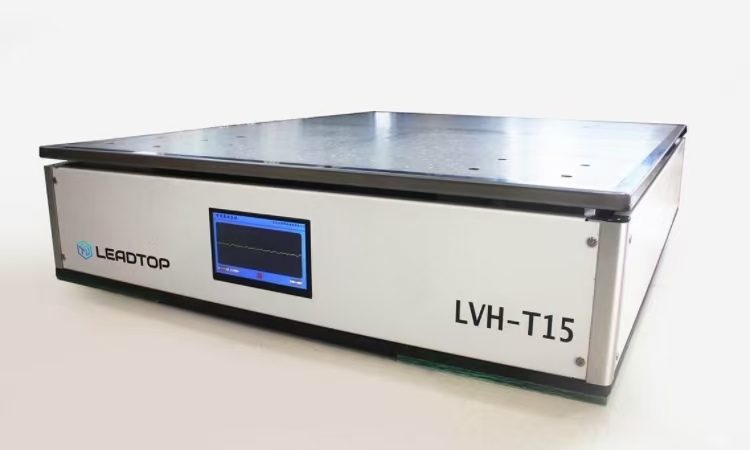
LHV Series / LVH-T15 |
2 ton+ load capacity + ultra-low frequency |
|
Confocal/Fluorescence Microscope |
High (nano–micron level) |
TA Series / ZDT-P |
Wide-band isolation coverage |
|
Raman/Fluorescence Spectrometer |
High (optical path difference sensitive) |
Vibration causes spectral line drift |
|
|
Optical Interferometer |
Extremely High (sub-nanometer) |
Interference fringe stability |
|
|
Precision Optical Path Setup |
Medium |
Natural frequency as low as 1–2 Hz |
|
|
General Optical Experiments |
Low |
Low cost, stable and reliable |
5.3 Step 3: Specification Locking—Check Core Parameters One by One
Before locking in a specific model, verify the following 6 core parameters one by one. Any parameter that fails to meet standards may cause problems:
|
Core Parameter |
Meaning |
Acceptable / Excellent Standard |
|
Natural Frequency |
Minimum vibration frequency of the isolation table itself |
Acceptable <5 Hz; Excellent 1–2 Hz (air-floating/active) |
|
Effective Isolation Band |
Frequency range where isolation works |
Acceptable 1–50 Hz; Excellent 1–200 Hz full band |
|
Vibration Attenuation Rate |
Proportion by which vibration is reduced |
Acceptable ≥90%; Excellent ≥95% |
|
Six-DOF Control |
Comprehensive control of 3 translations + 3 rotations |
Must-have! Vibration in all directions must be isolated |
|
Load Capacity |
Maximum equipment weight allowed |
Actual load ≤ rated capacity × 70% |
|
Response Time |
Speed at which active system senses and responds to vibration |
LeadTop VCM: fast response; ≤30 ms |
⚠ Mistake 1: Thinking "placing the instrument on a tabletop is enough, no special isolation needed"
One lab placed an AFM directly on a regular lab bench; after one week, data repeatability severely declined. Testing revealed that 2–5 Hz low-frequency vibration from surrounding foot traffic was the culprit. The problem was only resolved after installing an active isolation table.
Lesson: The vibration tolerance of ultra-precision instruments such as AFM and TEM is typically at the nanometer or even sub-nanometer level. Regular tabletops simply cannot meet this requirement—specialized isolation is essential.
⚠ Mistake 2: Only looking at price, buying a "usable" passive table that turns out insufficient
One lab purchased a lower-priced passive isolation table to support a spectrometer, but the lab was near a subway and 0.5–5 Hz low-frequency vibration could not be isolated. Spectral lines continued to drift, and they eventually had to upgrade to an active isolation solution, with cumulative costs reaching 3 times the original budget.
Lesson: The isolation budget for vibration-sensitive instruments is "insurance." Downgrading the purchase only increases subsequent replacement costs.
⚠ Mistake 3: Only focusing on isolation performance, ignoring installation space
One lab purchased a high-performance isolation table, but its body height of 800 mm exceeded the bottom height of the lab wall cabinets, making installation impossible. They had to return it and switch models, delaying the project by two months.
Lesson: The TA series ultra-thin type (100–115 mm) is specifically designed for compact laboratories. Always measure installation space before purchase.
⚠ Mistake 4: Assuming active isolation "works once installed and needs no attention"
One lab installed an active isolation table; after two years of operation, sensor drift caused isolation performance to decline. The team was unaware that periodic calibration was needed, and experimental data remained abnormal until they contacted the manufacturer to replace the DSP control module.
Lesson: Active isolation systems require periodic calibration. The VCM series uses low-power design with relatively long maintenance cycles, but a maintenance record should be established. LeadTop provides long-term parts supply (DSP module can be replaced within 10 minutes).
⚠ Mistake 5: Buying instruments first, then addressing isolation when building a new lab
One research group purchased an AFM first, then considered isolation. They found the equipment load exceeded standards, tabletop dimensions did not match, and foundation load capacity was insufficient, requiring rework and additional time and funds.
Lesson: New laboratories should complete vibration environment assessment during the planning phase, reserving installation space and air supply interfaces for isolation systems.
7.1 Quick Decision Table
Match your instrument type and budget to find the right solution (30-second quick match):
|
Equipment Type |
Vibration Sensitivity |
Budget Range |
Recommended Solution |
|
General Optical Experiments |
Low |
¥10k–¥20k |
POT-P Solid-State Isolation Platform |
|
Precision Optical Path Setup |
Medium |
¥20k–¥30k |
ZDT-P Air-Floating Table |
|
Optical Microscope / Spectrometer |
High |
¥30k–¥80k |
VCM-S400 Active Isolation Bar |
|
AFM / High-Precision Optics |
Extremely High |
¥70k–¥100k |
TA400/TA600 Active Isolation Table |
|
Nanometer-Level Precision Instruments |
Extremely High |
¥100k–¥150k |
TA800 Active Isolation Table |
|
Quantum Research / Medical Imaging |
Extremely High |
¥150k+ |
LHV Series Active Isolation Module (0.5–5 ton) |
|
TEM/SEM Electron Microscopes |
Extremely High |
¥300k+ |
LVH-T15 Heavy-Duty Active Isolation Platform |
The above prices are reference prices; actual prices are subject to the latest quotes on the LeadTop official website. Active isolation products require customization based on specific application scenarios.
7.2 Maintenance Cost Comparison
Research laboratories typically require instruments to operate continuously 7×24 hours, which places extremely high demands on the reliability of isolation systems. The following is a maintenance comparison of mainstream products:
|
Dimension |
POT-P / ZDT-P (Passive) |
VCM Series (Active) |
TA Series (Active) |
|
Maintenance Frequency |
Low (check every 6 months–1 year) |
Very low (maintenance-free design) |
Medium (periodic calibration) |
|
Continuous Operation |
Unlimited |
7×24h |
7×24h (IP42) |
|
Parts Replacement |
Very rare |
Very rare |
DSP module replaceable in 10 min |
|
LeadTop Service |
Standard warranty |
Standard warranty |
CMA certification + long-term parts supply |
Q1: Which is better—passive or active isolation table?
There is no absolute superiority, only scenario matching. Passive isolation (air-floating/solid-state) requires no power, has a reliable structure, and low maintenance costs, suitable for scenarios with relatively controllable vibration environments dominated by mid/high frequencies. Active isolation provides stronger suppression of 0.5–10 Hz ultra-low-frequency vibration, suitable for laboratories with severe low-frequency vibration such as those along subway lines or in high-rise buildings. With sufficient budget, active isolation is the more prudent choice.
Q2: What is the difference between the VCM and TA series?
The VCM series are modular active isolation bars that require a tabletop, suitable for scenarios with an existing tabletop or needing flexible configuration. The TA series are desktop active isolation tables (integrated design) with a built-in ultra-thin tabletop (100–115 mm), simple installation, suitable for new equipment purchases or space-constrained laboratories. Both share the same core technology and support six-degree-of-freedom control.
Q3: Do isolation tables require regular maintenance?
Passive isolation tables (air-floating/solid-state) are essentially maintenance-free, requiring a check once every 6 months to 1 year. The VCM series active isolation bars feature a maintenance-free design with stable long-term operation. The TA series active isolation tables recommend periodic calibration (LeadTop provides technical support), and the DSP module can be replaced within 10 minutes, with an extremely short maintenance window.
Q4: Does LeadTop have quality certification for its isolation tables?
All LeadTop products comply with enterprise standard Q/S001-2023 and hold CMA metrology certification (No. LS2023-046). Each unit ships with an inspection report, and users may request raw data for verification. CMA certification ensures the accuracy and traceability of parameter data.
Q5: I already have a lab bench—can I add an isolation system separately?
Yes. The VCM series active isolation bars feature a modular design and can be flexibly combined to adapt to different tabletop sizes and load capacity requirements, making them ideal for retrofitting existing tabletops. Contact a LeadTop engineer for on-site assessment to confirm tabletop specifications and load capacity matching before purchase.
LeadTop full isolation product line: VCM Series Active Isolation Bars (from ¥32,200) | TA Series Desktop Active Isolation Tables (from ¥73,700) | LHV/LVH-T15 Heavy-Duty Active Platforms (¥150k+) | ZDT-P Air-Floating Isolation Table (¥29,900) | POT-P Solid-State Platform (from ¥10,100)
LeadTop provides: Free vibration environment assessment · Selection consultation · On-site installation guidance
Website: https://www.opticaltable.cn/shop/ Email: sales@opticaltable.cn Phone: +86-791-88224425 / +86-18870003091
This article is compiled based on publicly available product information from LeadTop (Nanchang LeadTop Technology Co., Ltd.). Technical parameters are sourced from official product pages and CMA-certified inspection reports (No. LS2023-046). Prices are as of August 2026; please refer to the latest official website quotes.


