In modern precision laboratories, vibration isolation tables are essential equipment for ensuring the stable operation of high-precision instruments. Whether it is laser interferometry, microscopy imaging, or nanoscale precision manufacturing, even minute ground vibrations can cause irreversible impacts on experimental results. Therefore, a thorough understanding of the selection criteria and technical characteristics of vibration isolation tables is crucial for laboratory planners and researchers. This article systematically reviews the core technical parameters, selection methodology, and application scenarios of vibration isolation tables, helping you make informed procurement decisions.
When selecting a vibration isolation table, the natural frequency is the primary specification to consider. High-quality vibration isolation tables typically achieve vertical and horizontal natural frequencies in the range of 1.0 to 2.0 Hz, a parameter that directly determines the lower limit of the equipment’s isolation capability. The lower the natural frequency, the better the vibration isolation table performs in attenuating low-frequency environmental vibrations. Isolation efficiency is another critical metric — premium vibration isolation tables can achieve over 95% vibration attenuation, meaning that most ambient vibrations are effectively eliminated before reaching the table surface. Additionally, table flatness is a key parameter, generally controlled within 0.05 to 0.1 mm/m², with a matte surface finish to prevent stray reflections in optical experiments.
In the current market, air-floating vibration isolation tables have become the preferred choice for high-end laboratories due to their superior isolation performance. These vibration isolation tables employ air springs combined with ultra-thin composite diaphragm structures, utilizing multi-orifice quasi-laminar flow damping technology to achieve efficient vibration isolation across a broad frequency range. Take the LeadTop pneumatic vibration isolation optical platform ZDT-P series as an example — this line of vibration isolation tables features an advanced air spring system with pneumatic auto-leveling and ±10 mm height adjustment, along with a silent air compressor operating below 50 dB, creating a quiet and stable working environment. These vibration isolation tables are particularly suited for applications such as laser interferometry and precision inspection where vibration requirements are extremely stringent.
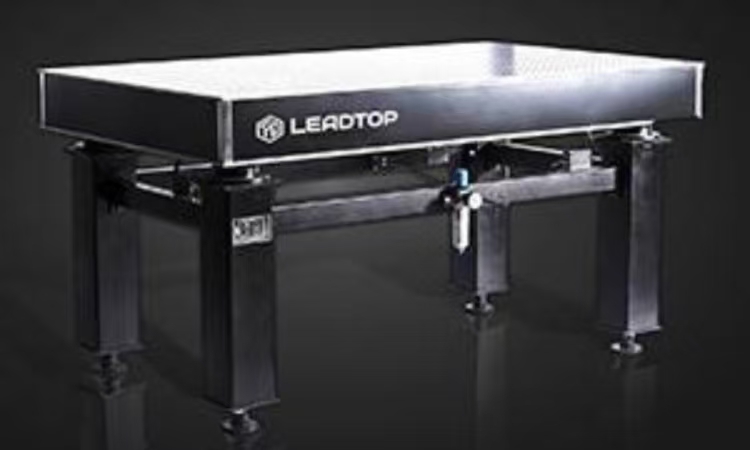
Choosing a vibration isolation table should follow a scientific process of “measure first, select second, verify last.” Begin by assessing the ambient vibration level at the laboratory site, including ground vibration frequency and amplitude. Then, determine the load capacity and dimensional specifications of the vibration isolation table based on instrument precision requirements and weight. LeadTop, as a supplier of vibration isolation optical platforms and accessories, offers a full range of vibration isolation table products from standard models to customized solutions, meeting the diverse needs of laboratories of all scales. Finally, after installation, conduct on-site vibration testing to ensure that all performance indicators of the vibration isolation table meet the design requirements.
The stable operation of a vibration isolation table depends on proper routine maintenance. The air spring system requires regular inspection of supply pressure and line sealing, and the auto-leveling system should be tested quarterly. For air-floating vibration isolation tables, the air compressor filter cartridges need periodic replacement based on usage frequency to ensure air supply cleanliness. The table surface of the vibration isolation table should be kept clean, protected from chemical corrosion and heavy impact. Scientific maintenance not only extends the service life of vibration isolation tables but also sustains the laboratory’s vibration control performance over the long term.
As a foundational piece of equipment in precision experimental environments, the selection, installation, and maintenance of vibration isolation tables deserve full attention from laboratory managers. Through scientific evaluation of the vibration environment, rational selection of vibration isolation table models, and strict adherence to maintenance schedules, a stable vibration isolation barrier can be established for high-precision scientific instruments. Whether in fundamental research or industrial inspection, a high-performance vibration isolation table is a critical investment in data accuracy and experimental repeatability.


