The aerospace sector demands the absolute pinnacle of equipment precision and operational reliability—satellite optical payload assembly and ground calibration, precision testing and calibration of inertial navigation core components, and non-destructive inspection and dimensional measurement of rocket engine critical parts. Every step in this chain must be built upon a foundation of highly stable work platforms. Any systematic error introduced by subtle vibration disturbances during ground testing can be amplified into catastrophic consequences during actual flight missions. This article examines a carefully selected set of proven vibration isolation examples from the aerospace domain to systematically review the current application status, dominant technical pathways, and accumulated practical experience of isolation technology in this most demanding of industries. These vibration isolation examples span the full spectrum of aerospace testing needs, from component-level validation to full-system integration tests. As the aerospace industry pushes toward ever-higher precision standards, vibration isolation examples become not just instructive references but essential design inputs for new test facilities.
Vibration Isolation Examples for Satellite Optical Payload Testing
High-resolution optical payloads destined for satellite deployment must be tested under ground conditions that faithfully simulate the microgravity and micro-vibration environment of space, to guarantee imaging quality after orbital insertion. One vibration isolation example from a major aerospace research institute is particularly instructive: the institute deployed a T-shaped steel-concrete composite large-scale isolation platform system, with table dimensions of 7.9m × 3m × 0.6m, integrally filled with C30-grade high-strength concrete. Supported by precision pneumatic isolators, this vibration isolation example achieves vertical natural frequency ≤1.0Hz and horizontal ≤1.5Hz. Surface flatness is rigorously controlled within ±0.05mm/m², surface roughness below 0.8μm, with a dense M6 threaded hole array at 50mm spacing providing an exceptionally precise and stable mounting reference plane for diverse optical payload assemblies. This vibration isolation example compellingly demonstrates the irreplaceable core value of ultra-large, high-rigidity isolation platforms in aerospace optical ground testing. In satellite payload testing, vibration isolation examples of this caliber represent the gold standard for ground support equipment performance.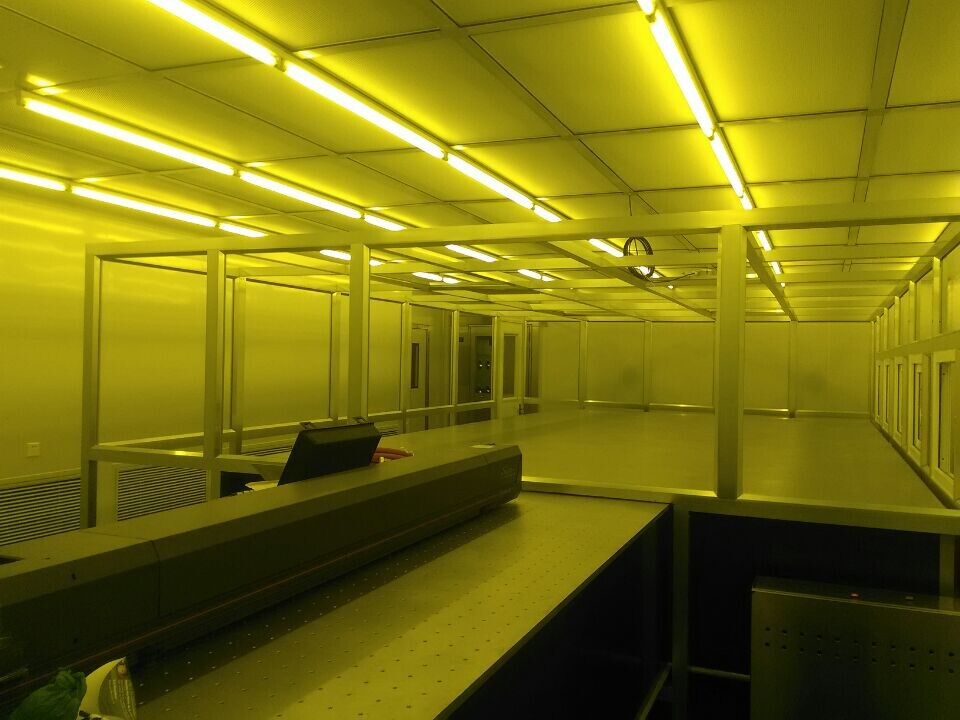
Vibration Isolation Examples for Inertial Navigation System Calibration
The core devices of inertial navigation systems (INS)—gyroscopes and accelerometers—have calibration accuracy that directly determines the navigation precision and attitude control stability of the vehicle. During calibration, any external vibration disturbance from any source is picked up by the sensing elements and mixed into the calibration data, forming systematic errors that are exceedingly difficult to separate. One vibration isolation example deployed by an aerospace research institute employs the most advanced active isolation technology available: the platform achieves a natural frequency below 0.5Hz, with high-sensitivity acceleration sensors capturing vibration signals in real time, a DSP control system driving electromagnetic actuators to generate counter-compensation forces, achieving over 90% vibration attenuation across the 0.5-200Hz broadband range. Compared with traditional passive pneumatic isolation approaches, the active system's vibration isolation example shows a performance advantage of 3-5 times in the ultra-low-frequency 0.5-5Hz band. These vibration isolation examples make it abundantly clear that aerospace precision calibration tasks must rely on high-performance active isolation technology to meet ever-tightening accuracy requirements. The increasing adoption of active solutions in aerospace vibration isolation examples signals a decisive technology shift across the industry. As more active vibration isolation examples are documented and shared, best practices for implementation continue to mature.
Vibration Isolation Examples for Aero-Engine Component Metrology
Three-dimensional geometric tolerance measurement and high-speed dynamic balancing inspection of turbine blades demand an almost extreme level of measurement environment stability—blade profile tolerances are typically in the micron range, and even the slightest environmental vibration causes increased measurement data dispersion, directly affecting blade pass/fail judgment accuracy. One vibration isolation example from a major aero-engine manufacturer offers valuable industry reference: the company custom-designed a steel-concrete composite isolation platform for its precision measurement and inspection center, configured with 12 ZDT500 isolators, achieving vertical natural frequency ≤1.0Hz and a load capacity of 30 tons. Post-commissioning measurement data from this vibration isolation example showed that CMM system repeatability improved by over 40%, and blade inspection first-pass yield increased markedly. As an optical table and isolation accessory supplier, LeadTop possesses deep capability in providing non-standard customized isolation platforms for aerospace clients—whether the requirement involves ultra-large dimensions, extreme load capacity, or unique structural configurations, all can be custom-designed and manufactured to precise engineering specifications. From these vibration isolation examples, a fundamental principle emerges: isolation platform design parameters must be deeply matched to the specific measurement object and task at hand. This lesson, echoed across countless aerospace vibration isolation examples, is that customized engineering always outperforms generic approaches.
The extreme standards of the aerospace sector impose a continuous innovation requirement on vibration isolation technology. From satellite optical payload ground testing to INS precision calibration, from engine component geometric inspection to full-scale space environment simulation, vibration isolation examples consistently indicate that high-performance isolation platforms constitute indispensable foundational infrastructure within the aerospace precision engineering system. Their importance is no less than that of the measurement instruments and testing equipment they support. As space missions advance toward higher precision, deeper space, and longer service life, isolation technology will continue to evolve. Each new vibration isolation example will serve as a solid stepping stone propelling aerospace engineering progress forward. The aerospace community now recognizes that systematically cataloging and analyzing vibration isolation examples is essential for standardizing best practices. From optical payloads to inertial navigation, aerospace vibration isolation examples define the performance envelope of modern ground support systems. In the final analysis, the story of aerospace precision is inseparable from vibration isolation examples—each one a testament to the engineering discipline that keeps our most advanced machines perfectly still. The cumulative wisdom embedded in these vibration isolation examples continues to shape how the next generation of aerospace test facilities is conceived and built. For any organization involved in aerospace testing, studying existing vibration isolation examples is not just recommended practice—it is an essential part of facility planning and risk mitigation.


